

If you’d like to receive my blog in your in-box each week, click here.
Not long ago, needing a palate cleanser for what was feeling at the time like a steady devaluation of human decency in the world, the hubs and I rewatched The Good Place, a show that contemplates pretty deep issues of ethics and morality and the possibility of redemption in the guise of a silly, hilariously funny, endearing sitcom about the afterlife.
The rewatch sent me down a rabbit hole of reading about the philosophical schools of thought creator Michael Schur studied in shaping the show and the many experts he consulted—among my explorations a lovely New York Times article that talked about the moral questions at the heart of the show about what makes people “good” or “bad.”
“In a low moment,” says writer Sam Anderson about interviewing UCLA professor of philosophy Pamela Hieronymi, one of the advisers on The Good Place, “I mentioned to Hieronymi that American culture seems to have abandoned ethics. She disagreed strongly. ‘It’s amazing to me how moralized and moralistic we seem to be,’ she said, ‘especially right now. It’s just a cultural blamefest.’”
Which prompts this realization in Anderson: “All the arguments that rage every day across social media and cable news—racism, reverse racism, statutes of limitations, reparations—are fundamentally about ethics. Even the top-down distractions meant to derail these conversations are conducted under the guise of earnest concern for right and wrong,” a fact that Hieronymi credits for part of the popularity the show enjoyed.
By this argument, most people are deeply concerned about good in the world; it’s just that we each define that differently.
The idea struck me as powerfully as it clearly did the story’s writer.
The Role Community Plays
We don’t live in a world of pure philosophy or uncomplicated circumstances. Our lives are endlessly complicated and complex and individual. Put us in relationship with other equally complicated, complex individuals and there’s bound to be friction.
Many experts will tell you that romantic relationships take work, and anyone who’s ever been in one knows that’s true; learning to accept and respect your partner as an individual with their own preferences and desires and beliefs and perspectives can be some of the hardest work of creating a successful relationship.
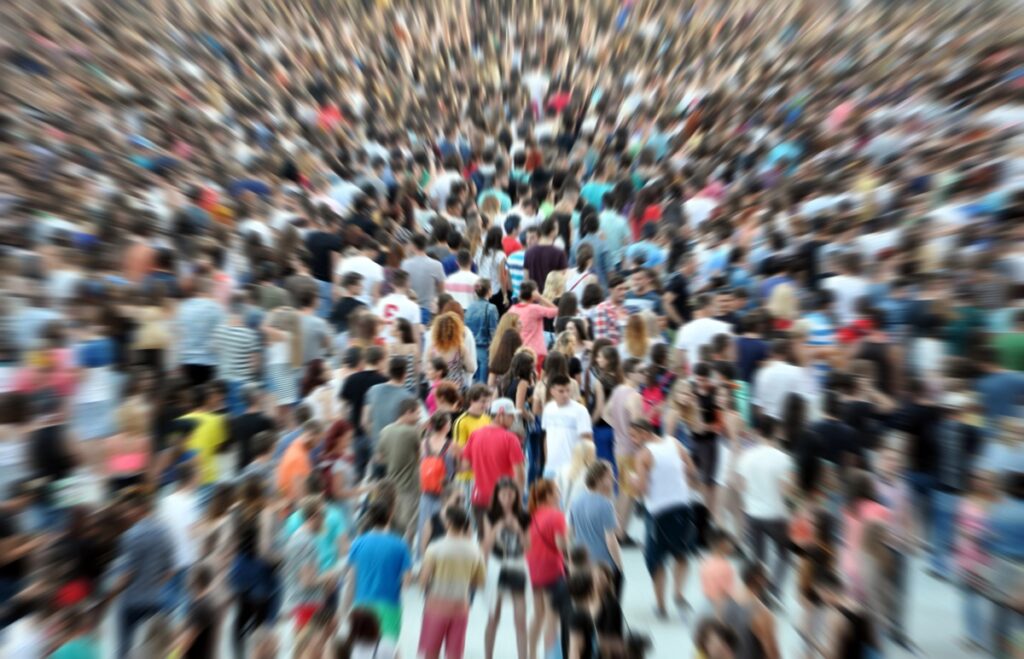
Now imagine that at scale, adding in billions more individuals, each with their own paradigm as well, and you begin to understand the overwhelming complexity of human interaction in a global world.
For society to function—any society, from the smallest family unit to the largest global community—there has to be some basic agreement of right and wrong and distinctive choices for how to live one’s life.
And if you’ve ever been in any kind of group, from a neighborhood HOA to coworkers to the PTA to your own family, you know how much exponentially harder it becomes to find consensus with each additional person’s viewpoint, personality, and understanding to consider. Recently I watched my husband navigate a scheduling kerfuffle with his pickleball group far out of proportion to the importance of the topic, simply because of the number of people involved.
In our stories we are creating characters who exist within communities and societies, and we can’t ignore how their surroundings and interactions impact them and influence their behavior. We can’t ignore that each of those people in their world—every single character in your story—is also their own unique individual with disparate views and experiences and beliefs and understanding, experiencing their own perspective of their surroundings and situation and circumstances and interactions, which influences their own behavior, which in turn impacts every other character.
Much of the journey of the protagonist has to do with those relationships and how your character navigates them. Nearly everything in nature exists along a spectrum, not in binaries or absolutes, so presenting them in your story simply because you’ve read that you need a really evil antagonist or you worry about a character seeming flawed or unlikable won’t strengthen your story, but rather the opposite: It robs it of verisimilitude and feels unreal to readers, impossible to relate to or invest in.
We’re all flawed and—at least to some—unlikable. Much of our struggle, as individuals and as a society, often comes from the expectations and judgments every one of us holds for ourselves and others. We expect consistency from creatures natively full of contradictions. We make blanket black-and-white judgments, often without full context: this person or belief or action is “good” and this one is “bad,” forgetting that these verdicts are subjective and often situational.
The Role of Art and Artists in Society
I think artists and especially authors are the ones who help us understand each other. And we do it through creating a microcosm of society in the pages of our stories. We slant it with our own beliefs and biases, the values and ideas that we deem important or noble or true. We may act as if—may truly believe—those are absolute truths, but is there any such thing?
Really I think story is just a microscope for us to examine and consider our maddening, glorious, terrible species and all the infinite permutations we contain. To let us try to find definitive answers for questions that have none.
None of us has the right answer or knows what is right. In fact right and wrong are moving targets; they exist only in human conception, so we are the ones who define it. (Ask my dog if it’s “wrong” to lick up deer poop like chocolate sprinkles even as I’m shouting about how disgusting he is.) All these different schools of philosophy spring from the fact that there is no right answer, however much any of them may profess to have it.
Yet the seductive lure and the heart of fiction is a journey through the world as it is versus the world as we dare to hope it could be through our efforts.
The main obstacles lie within ourselves, individually and collectively. Ultimately stories are about people, and our messy and flawed attempts to reshape our world, the world, for the good, whatever we feel that is, and all the ways we may rub up against billions of others, all trying to do the same thing, through their own limited frame of reference and carrying their own weighty and invisible emotional baggage.
I’m not naively suggesting that everyone means well, or even that we’re all doing the best we can. We’ve seen too many examples of late that clearly indicate the opposite.
But something about the idea that maybe even human beings’ worst behavior might stem from an instinct to do what they believe to be good, however flawed or skewed their view of that may be, feels comforting to me.
And maybe that’s where the greatest power of storytelling lies: in its ability to let us believe in ourselves as a species and keep striving—or at least hoping—for our better angels to prevail.
FoxPrint Editorial helps writers strengthen their manuscripts through developmental editing, education, and practical writing guidance. Explore more articles on revision, storytelling, and the publishing process.
If you’d like to receive my blog in your in-box each week, click here.