

If you’d like to receive my blog in your in-box each week, click here.
Not long ago I had a consultation with an author who, at the end of our discussion of the areas of her first fifty pages that might benefit from strengthening and development, said, “I knew that. I had a pretty good feeling I hadn’t fully developed those areas.”
It’s not the first time I’ve heard authors say something like that. It’s not the tenth time, to be honest. I frequently hear similar comments from authors after they get my editorial feedback: variations on, “I had a feeling…” or “I suspected as much.” I always tell writers to trust their instincts: If they feel like something isn’t quite working in their story yet, chances are good it probably isn’t.
But it’s so easy to overlook those areas, even when we’re perfectly aware of them on some not fully acknowledged level. Writers may wonder why their stories aren’t ready to submit, or why they aren’t writing consistently or they aren’t as productive—but I’ve almost always found that with a little gentle digging on my part, they already know the reasons for their writing resistance or creative avoidance.
Regular readers know that the hubs and I enjoyed a couple of trips to Europe earlier this year (this isn’t normal; it’s been an exceptionally good travel year). When I’m traveling I don’t worry too much about my usual fitness and nutrition routine. I try to stay active and reasonably mindful about what I’m eating, but I’m also going to focus first on trying plenty of local delicacies and enjoying my downtime.
So after two consecutive trips like that, it’s taken a noticeable physical toll.
Normally it’s not hard for me to get back on the straight and narrow. And because I have a regular workout regimen, my muscles are also quicker to spring back into shape than they were before I maintained that routine. (Let it be noted that the same goes for our creative muscles: The more we regularly exercise them the more readily we can access our creative resources even after we’ve taken a break.)
But we’ve been home for many weeks now and I can’t seem to shed the evidence of my vacation indulgences, even though I’ve gone back to my usual healthier habits.
Or had I…?
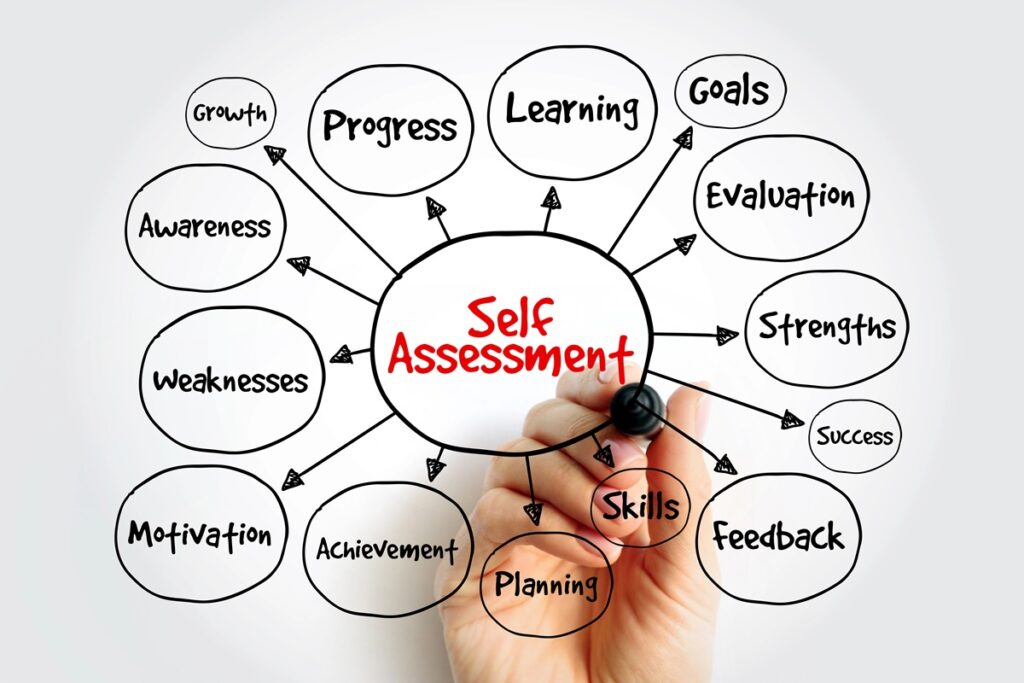
Where are you fooling yourself about your writing?
Finally growing frustrated over my ability to move the needle, I took a harder look at my habits since we’ve been home and I realized I wasn’t being as conscientious as I thought I was. My walks daily with my dog, usually a main source of cardio exercise for me, had become shorter and more leisurely as oppressive Texas oppressive summer descended.
My eating habits, which are generally fairly healthy because that’s most often what I prefer, weren’t quite as mindful as I thought they were, I realized after a dinner with a girlfriend where we shared not one but two rich desserts and an appetizer.
There’s nothing wrong with the occasional splurge—it’s what makes it a lot easier for me to generally make healthier choices. But looking back I realized that lately they hadn’t been quite as occasional as I thought.
I was telling myself I’d returned to my usual moderate habits, but when I took a closer look it was easy to see why I wasn’t getting the results I wanted.
Authors often do this with our creative practice as well. We may tell ourselves we’ve been working diligently on a story, but a little honest self-examination would reveal how much of our writing time we’ve spent scrolling mindlessly through social media or lost in a research rabbit hole even as we bemoan the fact that our progress is so slow.
We might let ourselves believe we’re finished with a story or that it’s as good as we can make it, even when we suspect we probably haven’t developed the main character enough, or that something about the story just isn’t quite there yet. But we’re dying to start submitting or publish, so we press send anyway.
The problem with not being fully honest with ourselves is that the only person it hurts is us. We don’t make the progress on our stories that we want to be making because of our own bad habits we’ve fallen into, or we don’t get the response we hope for from industry pros and readers because our story wasn’t yet the best version of itself, but we didn’t have the patience to keep working on it until it was.
Of course I’m not knocking authors, and I certainly wouldn’t downplay how challenging the writing life can be in so many regards. And this kind of relatively benign self-delusion is deeply, understandably human.
But not being fully honest and clear-eyed with ourselves and our writing holds us back from achieving what we want to with it—so it’s a habit well worth learning to spot so you can take action and do something about it.
Audit your creative habits and patterns
Before you can tweak—or overhaul—your habits and routines, you first have to identify what you’re actually doing that’s not giving you the outcome you want.
Take a hard-eyed look at the truth, the way I finally did with my health habits. Look at the results you’re getting and then, with brutal honesty, examine the effort you’re putting in. Keep a daily record if you have to of exactly how long you write and how you spent that time—minutely.
Even a five-minute “brain break” to scroll social media is time you’re not actually dedicating to writing (and be honest about that too…how often is it really five minutes?). When you’re “researching” facts or searching for a synonym or looking up the phase of the moon on a certain date in your historical fiction or how two moons would affect the tides in your science fiction fantasy, how much of that time are you following rabbit trails that may capture your interest but—being honest—don’t really have direct relevance to what you’re writing?
These activities may have a place in building your career, but they’re separate “line items” from actually writing. Make sure you’re budgeting for them and not carving them out of your writing time.
Where are you glossing over problem areas of your story you know still need attention because you’re frustrated or impatient or just aren’t sure how to address them? Go through my extensive Self-editing Checklist and be ruthlessly clear-eyed about what elements you’re genuinely confident checking off.
Read more: “Reclaiming Your Time”
Identify why you’re falling short of your writing goals
Before you can make a lasting change, you have to address the cause of the problem, not just the symptom.
There’s a reason we get distracted from our goals: We’re bored, we’re stuck, we want respite from the frustration and challenge of working through something hard. Often whatever we distract ourselves with is easier, less demanding, even fun, and writing—as much as those of us who pursue it love it—can not infrequently be none of those things.
There are reasons we ignore or gloss over parts of our stories we know need more work. Are you worried that you don’t know how to fix what’s not working in your story—or don’t have the talent or skill to do it?
Find the problem and deal with those underlying demons and doubts, or no amount of discipline or willpower is going to succeed in creating more productive lasting habits.
Read more—so much more!—about handling writer demons here.
Change your behavior
This morning, fresh off my realization of my unproductive health habits since I’ve been home, my dog and I got our heinies outside and did a fast-paced, longer walk, fast enough to keep us both a little bit breathless and tired when we got back.
While we were out I noted one of the things that made it less enjoyable was the stifling heat and humidity, even at eight a.m. (ah, Austin in July), so tomorrow I’ll be out at seven.
I realized that one reason I’ve been reaching for a bowl of ice cream too often at night is that the cool creaminess is welcome in our sweltering weather—so I subbed out frozen bananas with a little peanut butter and cold cherries with Greek yogurt as healthier ways to address that craving.
Make it as appealing as possible to engage in the habits you want to instill. Set up writing dates with a partner or group, in person or on Zoom, where you have the solidarity and accountability of working on your writing together. Find a crit partner to help you spot (or be honest—confirm…?) and address areas of weakness in your story. Create new routines that address the reasons you aren’t sticking to your old ones and help you overcome them.
Read more: “Positive Training Your Creative Career”
Build in “cookies”
I refer to anything that provides a little treat or bright spot of indulgent reward to me as “cookies,” probably from habit from bribing (I mean rewarding) my dog for best behavior with a treat. It’s not too far off from the same reason: reinforcing desired behavior from Gavin with something he wants is how I get what I want. Life can’t be all discipline and denial; we need the carrot (or the cookie!), not the stick, to encourage the actions and results we want.
Read more: “The Carrot and the Stick”
Offering ourselves these occasional little indulgences isn’t a problem, unless it adds up into too many similar little indulgences. Collectively they can sabotage your efforts.
Moderation is important. I’m not suggesting you get off of social media entirely, for instance; maybe just monitor the time you spend on it (precisely—don’t estimate or ballpark it) and keep more mindful guardrails around it so that it doesn’t cut into your writing time.
Be patient and persistent
Making changes takes time. Getting back into the shape I want to be is an incremental process, not an instant-gratification one, just as creating our stories and building our careers is made up of all the cumulative daily show-ups and effort that gradually increases our word count, gets our stories fully edited and developed, moves us a few yards further down the field.
Intention combined with action becomes routine. Routine becomes habit. Habit builds our stories and our careers brick by brick by brick.
But if you’re honest with yourself, I’m guessing you already knew that, didn’t you?
Your turn: Your creative habit audit
Authors, try this experiment: Do an actual, precise audit of a week of your time:
- When is your writing routine scheduled? (You do have one scheduled, right—even if it’s just once or twice a week?) How much of that allotted time is spent actually writing? Be granular about it, to the minute if need be, even if you get up to get a drink or a snack, check text messages, do a social media “drop in.” Subcategorize that time too: How much is writing, how much research, how much ideation and thought, etc.? There are no judgments here; you’re just trying to get a sense of how you spend your creative time.
- If you’re struggling with your manuscript, do a gut check on where you worry it may not be as strong as you want it to be—and write down what you think you need to do to get it into strong, publishable shape. Why haven’t you done that? Write down any blocks—internal and external—that are keeping you from addressing those areas fully.
- Now you can assess your results to see how well your habits are serving your goals. For instance, if you work to a word-count allotment you repeatedly find it hard to hit, is it because you’re not actually writing words on the page for much of that time? Because it’s not a realistic goal, considering the other elements of your writing you also need to allot time for? If you’re shying away from making necessary changes to your manuscript, is it because there’s a specific craft area you’re weak in but haven’t dedicated the time to understanding and mastering it? Because you’re hesitating to ask for help from a critique partner or editor or coach?
- Now build in some “cookies” for breaking unproductive habits you may have formed and replacing them with new ones. Do you get that extra-fancy coffee after your two-hour morning sprint? Do you log your word count in a spreadsheet to enjoy seeing your measurable progress? After you successfully rewrite or expand a troublesome scene do you call a friend for a chat, or read a post from that blog you love, or play a game of Connections or Wordle?
You can repeat this audit every few weeks or months to see the progress you’re making in instilling new habits.
Authors, what areas of your writing or creative habits do you fool yourself about? What techniques do you use to identify and address them?
Further reading:
- “How Do You Balance Creativity and Career?”
- “Plan to Build Your Writing Career”
- “How to Succeed as a Writer: Make a Concrete Plan”
FoxPrint Editorial helps writers strengthen their manuscripts through developmental editing, education, and practical writing guidance. Explore more articles on revision, storytelling, and the publishing process.
If you’d like to receive my blog in your in-box each week, click here.
6 Comments. Leave new
Interesting post today, Tiffany, as usual. I have a few thoughts. Writing for me is a hobby. It is not like developing a new fiber optic communication system that I used to do in my day job. So the activity needs to be fun, every aspect of it, if possible. I have come to believe that the actual craft of putting the words on the page and editing them could be scheduled with Microsoft Project, with milestones, activities, resources, linkages, etc. But I do not believe creativity can be scheduled, and that is the fun part. For me, most of my creative ideas come when I am jogging in the morning or mindlessly watching TV at night. The thoughts just seem to pop into my head. Overall progress on a book or story, or even a short poem is totally dependent on my mood or unrelated activities of the day and what ideas may come. And that is what determines the schedule. In his book “On Writing,” Stephen King says he writes 2000 words a day every day except Christmas. Even if it were only 200 words a day, I don’t believe I could accomplish that. His mind must be filled with ideas waiting to be written. My goal is to tell a fascinating story no matter how long it takes. Scheduling my writing takes all the fun out of it!
I think knowing how you work best–and yes, what’s most enjoyable for you; also a big factor in my own approach to work!–is key to sustaining the practice of most anything.
Yet I’ve also found that if I wait for inspiration to strike before I start working I’m not nearly as productive or creative. It’s like a muscle for me–the more regularly I exercise it, the stronger it gets and the better it performs. Not every day is a dance with the Muse, and I’m not always brimful of fire to work on my creative projects. But if sit down and do it, every day at the regular time I sit and do that, eventually it all starts to flow. (And some days it doesn’t–I’m just gritting it out…but funny enough, rereading each type of work I’d be hard-pressed to tell the difference!)
You always sound like you know what you want out of your writing career, Jeff, so if you’ve found what works best and is most fun for you, that’s a wonderful way to keep at it.
Great stuff, Tiffany.
I was charged with teaching “Time Management” in the Financial Services Industry. I began by reading what were considered the best book on the subject.
The first thing I learned is that no one can manage time. It’s inelastic. Everyone, living or dead, got or gets twenty-four hours every day. And that’s all. No extensions; no do-overs. There are bad habits and good habits, but no time management, only Self- management.
The second thing I learned was that people who haven’t addressed the issue of productivity don’t know how long anything really takes, what interrupts them, or what they really do with their time.
I challenged those who took the class to log their time in 15 minutes blocks. For one day, stop every fifteen minutes, and write down what you did for the last fifteen minutes. (I forgave them in advance for what they would call me during that frustrating exercise.)
As incentive, I promised them that if they did this for one day, they could save as much as one hour Every Day and at least two bushels of frustration (or however they measured their frustration.) I also offered a few techniques that could help, I encouraged them to let me know how it all worked for them.
The few I heard from afterwards said they had saved at least one hour and not less than three bushels of frustration a day. They felt in control of themselves, and therefore their time, could reduce their frustration, and somehow, that made them much more productive.
Like your remarkable outline, it’s an agonizing reappraisal. In my experience, few people do it, but it works for those who do.
As always, thanks for the guidance and the wonderful outline, and have a great summer.
“No time management; only self-management.” Love that, Bob–for the autonomy and agency it suggests we all have over how we spend our own immutable 24 hours a day. And I love your (awful) exercise. 🙂 One reason I’ve always been drawn to the Buddhist practice of mindfulness is because I think we go on autopilot so easily in so many areas of life. We sit down to watch a TV show and three hours and six episodes have gone by before we realize. Ditto social media. We’re not very good at monitoring our time, I think–or our consumption (of anything), or even our attention–unless we train ourselves to be. Cal Newport’s Deep Work was also helpful to me in this regard, as was Alex Soojung Kim-Pang’s Rest–especially in realizing how much of my time I was actually focused and undistracted, not splitting my attention or “multitasking.” As your students learned, I realized I had a lot more time than I realized–which is one reason I’m able to be extremely productive without working 80-hour weeks. But I know I still manage to misjudge some of how I’m spending my time. Thanks for this! I’m going to try your hateful exercise and see what I learn…. 😉
Good luck! It’s about time you got some return on all the help you’ve given me. Chances are you won’t call me anything I haven’t been called before.
😉