


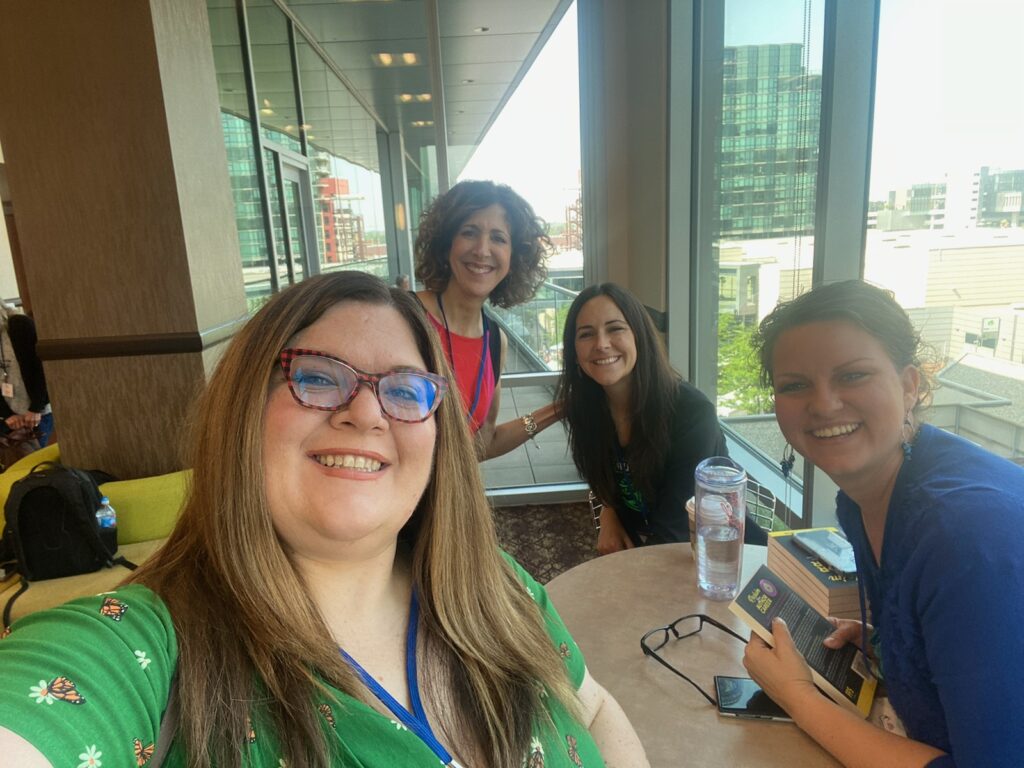
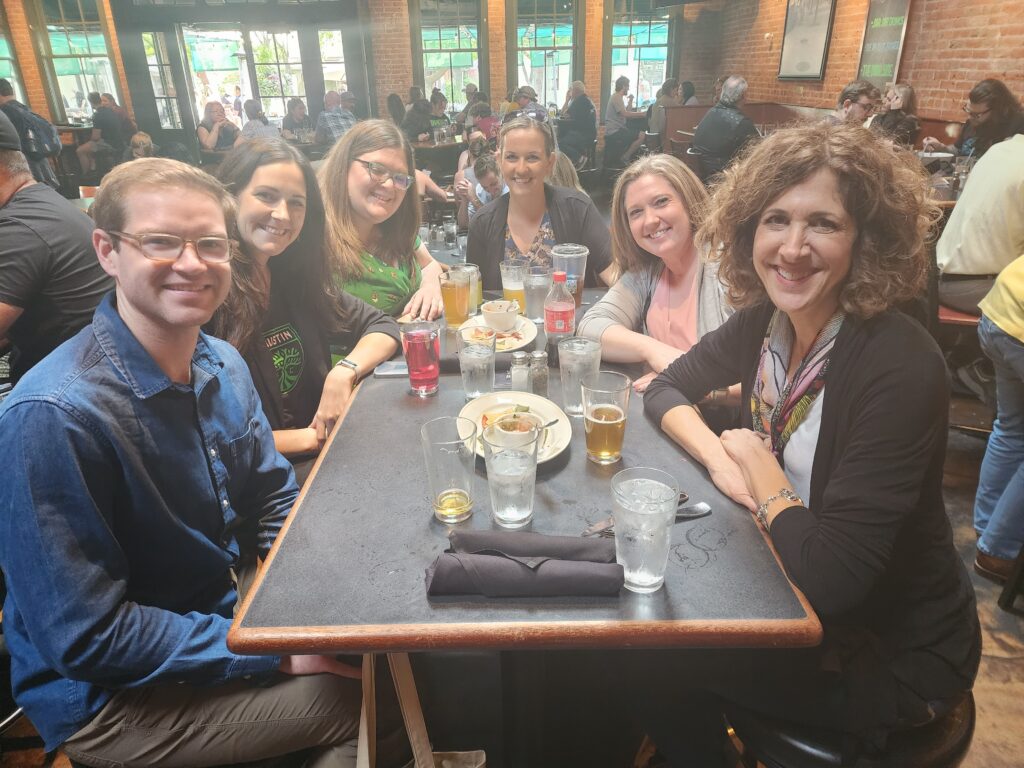
This past weekend I was in Boise as a keynote speaker and presenter for the Idaho Writers Guild at their lovely little conference in an unexpectedly charming little town where authors and industry pros gathered to talk about how to create a writing career.
If you haven’t attended a writer’s conference—and I strongly encourage you to—there are many benefits to being at one in person:
- You’ll meet other authors who will offer insight, perspective, solidarity, and camaraderie—some of whom may become your crit partners, beta readers, and even lifelong friends as you build your writing career.
- You’ll brush shoulders with industry professionals in many fields—trad pub, small press, and indie, agents and editors, coaches and marketers and more.
- You will learn much about this business and craft from people actively working and succeeding in it, and you will have opportunities to meet with and pitch some of the people you hope may buy your stories.

You will also hear a lot of advice at writing conferences, or any events geared toward authors. You’ll hear insights, how-tos, surefire systems, hacks, all designed—sometimes even guaranteed, if you follow their instructions—to get you whatever brass ring their creators promise: fast and easy drafts, publication, big bucks, a huge platform.
These aren’t lies. In most cases the people sharing these insights with authors have indeed used these systems to succeed with their own writing careers.
The problem is that they are often presented as the One True Path, satisfaction guaranteed for everyone as long as you do what they did.
Why Other People’s Writing Advice May Not Work for You
This brand of career advice makes a pretty big supposition based on a fallacy of logic: that everyone is the same.
Presumably you know, as a writer creating unique characters and as a lifelong human being yourself, that this statement is not true in any sense except that we share a genus and species and certain basic universal needs and desires.
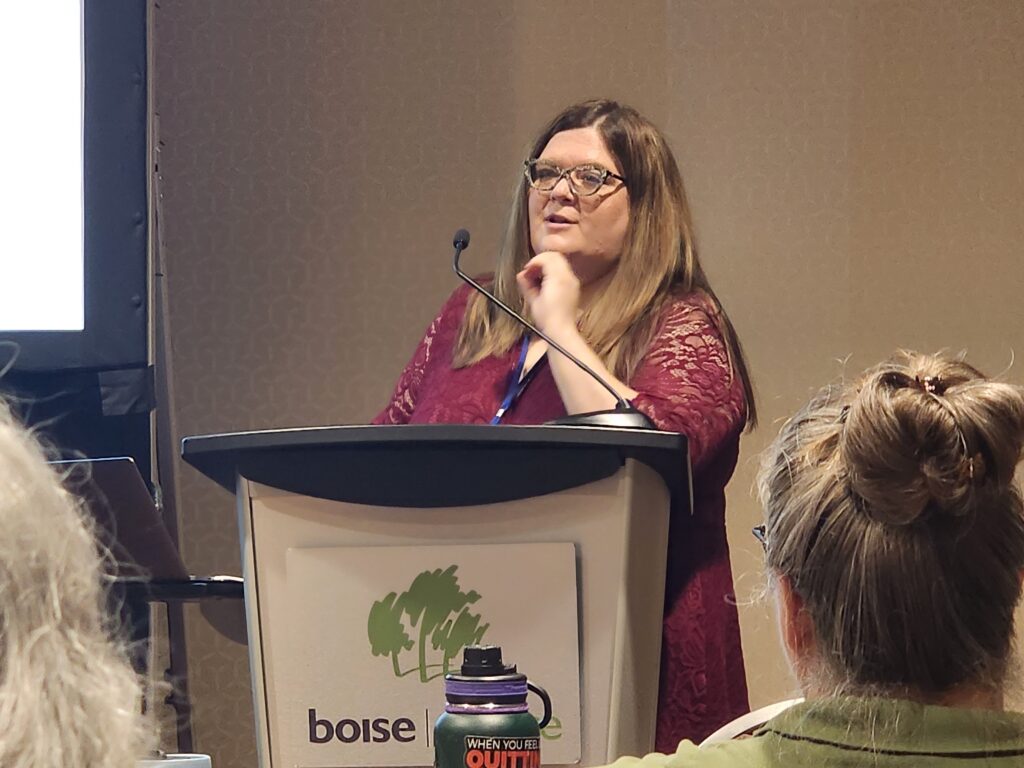
I sat in on a session I loved with Becca Syme—author, coach, creator of the Better-Faster Academy, and author of the popular Dear Writer series of books for authors—in which she encouraged authors to question the premise in assumptions like this.
For example, in the case of an author sharing the tips and tools that worked for them in their career, the unspoken or sometimes spoken assumption is, “If I can do this, so can you.”
But can you? Becca asked.
The Flaw in Other People’s Writing Advice
This seemingly logical-sounding statement makes a lot of underlying assumptions about other people’s abilities, resources, goals, values.
Perhaps Very Successful Indie Author had more capital to invest in major marketing campaigns than another author might, for instance. Maybe they’re easily able—and willing—to churn out a book a month (or even more, from a couple of authors I spoke with), and know how to work the Amazon algorithms to make the kind of monthly sales that can put stars and dollar signs in other authors’ eyes. Maybe they enjoy that kind of fast-paced writing and publishing process, the nuts-and-bolts of the marketing side of things.
Maybe they understand reader expectations in their genre more clearly, or are better at strictly adhering to them. Maybe they have more industry contacts. Maybe their goals are different. Maybe they have fewer obligations in their personal lives, or their priorities are different from yours as far as how much time they spend on their careers and how much with their friends and families and the rest of their lives.
People are different in so many important ways. Their abilities, their goals, their priorities, their values, their background and history, their talent and skill, their determination.
Read more: “Whose Standards Are You Judging Yourself By?”
Even if an author could slavishly follow step by step what worked for another author, they may not have the exact same abilities and talents. Or it might not be sustainable for them, or satisfying.
Very Successful Author’s road may not be for you—so their foolproof, magical One True Path to creating a writing career may not get you where you want to go.
Their techniques may not match up with how you want to—or are able to—write. That kind of pace and pressure may not be how you want to live. Maybe you like to have time to sink deep into your stories, grow them bird by bird—and to also have time away from work for the people and pursuits and pets you also value.
Very Successful Author’s road may not be for you—so their foolproof, magical One True Path to creating a writing career may not get you where you want to go.
But when it doesn’t, you might think it’s your fault—that you’re not talented enough, or determined enough. You didn’t hustle hard enough. You don’t have what it takes.
You lose faith in yourself and your writing. Maybe you even give up.
You come down on yourself for not being able to keep up and go the distance on the One True Path, without ever considering whether the road and the destination are right for you.
Your Writing Career Is Up to You
There’s a lot of advice and instruction out there. There are a lot of “best practices,” “foolproof systems,” “rules for success.”
But I’m going to make a blanket statement that may sound pie-in-the-sky, yet I mean it with every strand of my soul: If you choose to, you have the ability to create a satisfying, fulfilling, sustainable writing career for yourself right now, on your own, in this moment and for the rest of your life.
The core of it is to define for yourself what you can control and what you can’t; what you actually want and why; what you value; and what you are willing to do or sacrifice or compromise and what you’re not.
And the answers don’t come from anyone else’s experience or advice or insight or systems. They come from inside you.
What do you want your life to look like–not just your writing life, but your whole life? What makes you happy? What do you enjoy? What are you great at? What gives you satisfaction, day after day after day, and not just IF you manage to get whatever brass ring you’re being promised or that you dream of?
Read more:
Answering these questions for yourself not only helps you determine what road will lead you to the destination you hope to reach—it will also (forgive the cliché) allow you to enjoy the journey. It’s not just getting to the summit that makes the climb worthwhile—it’s the scenery and the company and the many other pleasures of the path along the way.
Process, not product.
Read more: “Are You Paying Attention to Your Progress?”
Defining Your Own Writing Career Path
If someone else’s process doesn’t work for you, that doesn’t mean you’re flawed or inadequate or untalented or didn’t work hard enough. It means that’s not the path for you.

Every one of us is a special, unique little orchid. There is no such thing as a one-size-fits-all approach to creating a writing career—just as there is no one-size-fits-all way to write or to edit or to revise. That was why I wrote my book Intuitive Editing, and the animating force and central message of it: to help authors find the story they want to tell and organically grow it from the inside out, rather than trying to fit their storytelling into someone else’s mold.
Read more: “When Will You Be a Success?”
I was deeply gratified to run into a number of other authors and colleagues at the Idaho Writers Conference who felt the same way—that’s not always the case.
- There was Becca, who shared her individualistic, positive, constructive approach to writing and a writing career in all her classes that kept me coming back to every one of them I could fit into my schedule.
- Author, coach, and speaker Colleen Story inspired authors in her keynote speech and classes by helping them realize that their writing matters for its own sake (as in her newest book, Your Writing Matters), and to define why, encouraging and offering practical techniques for finding what works for them and their individual processes.
- Author, teacher, and coach Claire Taylor does the same in her new book she was teaching from, Reclaim Your Author Career, where she talks about how aligning with your own proclivities and values can help with both storytelling and each writer’s career path by helping them define their own goals and what may be holding them back based on who they actually are, not who they or anyone else thinks they should be.
Every author has to find what works for them and their process and their personality and their priorities. It’s the only way to access your truest voice, your most creative and most original writing, to write the stories that only you can write—just as it’s the only way you can create a long-term career that can bring you consistent satisfaction and fulfillment despite this field’s many subjectivities, vagaries, and ups-and-downs that are out of your control.
This is it, friends–our one wild and precious life (as far as we know). Make sure you’re the one living it.
Read more:
2 Comments. Leave new
Tiffany, this really strikes a chord with me. I can’t swallow someone else’s system whole. I’ve never been able to do that. It’s like trying to eat a Jeep.
I attribute any growth I achieve as a writer to the unconscious incompetence-conscious incompetence-conscious competence model: I didn’t know I didn’t know that. Now I know I know it, and I choose to change it. Now I can do it, but I can learn to do it better. I just know there’s a fourth stage out there
What I learn is often the things I’ve taken for granted as I’ve read all my life: Oh, that’s what’s missing! That’s what needs to be stronger! I needed to write that part, but my reader doesn’t need to read it! And so forth.
The other big learning change is that just ‘knowing it’ isn’t enough, I need to absorb it. Stephen Parrish of the Lascaux review wrote a 67-page gem called The First 100 Words. I found it so simple and profound that I read it every day for a week. I felt the need to absorb it, have it become reflex. I still read it or parts of it occasionally to be sure I haven’t lost it. It makes points like, give us something to care about, provide appropriate detail, and get to the point. They’ve become part of my revising checklist. I’m now working my way through Writing the Breakout Novel, by Youknowwho. I’ll settle for better. And published. Breakout is for later.
Ha! “Eat a Jeep.” 🙂
I haven’t read the Parrish piece you mention, but I’d like to now. And I’m a fan of the Breakout Novel book, as you know. I couldn’t agree more that reading analytically is some of the best training out there for writers–learning to see in other people’s stories what you may not be objective enough to see in your own is such a great way to internalize craft. Better and published are good goals–healthy and doable. I think that’s how we hang on to our motivation and determination and create a career we can be satisfied with. Thanks for stopping by, Bob.