

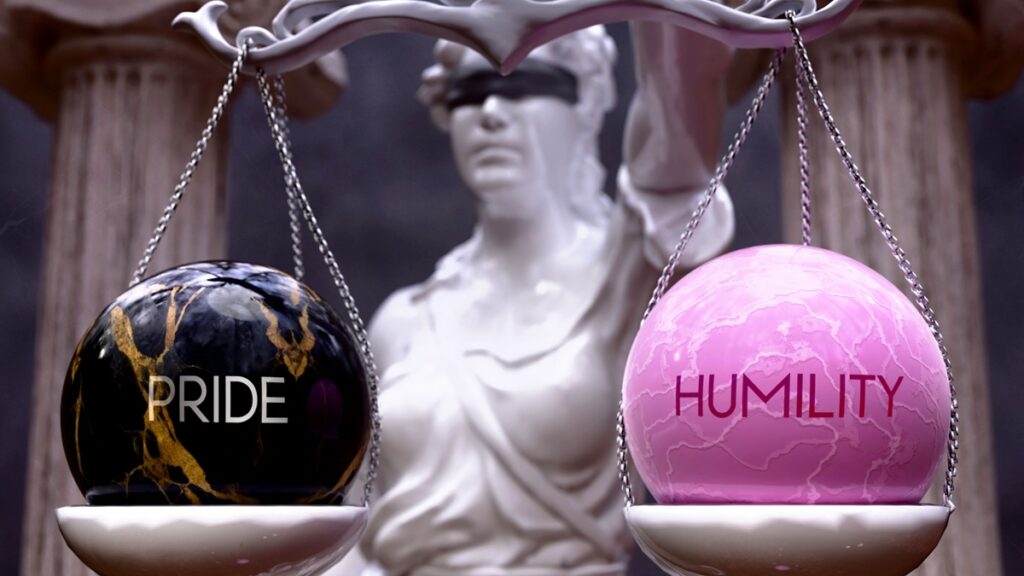
Developing healthy creative balance means respecting and honoring our art and our craft while staying grounded and keeping it in perspective.
If you’d like to receive my blog in your in-box each week, click here.
The other day I finished an especially long day at work—after a run of long days where an unexpected scheduling snafu meant I’d had to work through the last two weekends—and came into the kitchen as my husband was preparing dinner.
“I can do no more. That was so hard,” I moaned, collapsing onto a stool at the counter. I’d just finished writing a nearly 10,000-word editorial letter, on top of the days before that reading the manuscript multiple times and embedding countless detailed comments within it.
Every story is different, and some are more demanding than others; the manuscript I’d been working on was an intensive edit, and I proceeded to tell him how complex the story was, how many threads I’d had to keep track of and figure out how to help the author weave them together more effectively.
“Aw, did you have a tough day reading and writing?” he said with great, dripping sympathy, making me laugh.
My husband is not an asshole (most of the time), and he is extremely supportive. Despite how it sounds, he was not negating my efforts or exhaustion. He just knows that reading books and giving my opinion are two of my favorite things in the world to do.
And it’s my job.
Yes, it can be demanding work—just focusing that hard for long stretches of time can be a challenge, let alone reading the same stories over and over, taking an ever sharper microscope to a manuscript, and simultaneously keeping the gestalt of upward of 80,000 words of the story in my head to help ensure that every word, every line, every scene contributes effectively to the fabric of the whole.
But also…I’m reading books for a living, sitting (or standing) all day long in my climate-controlled home with my dog at my feet, my favorite person in all the world a shout away (and making my dinner on the regular!), comfortable and content and creative.
“That’s why they hire you,” my husband continued as I draped myself melodramatically over the breakfast bar. “If it didn’t need editing authors wouldn’t need you.”
The hubs is very good at reminding me—gently and with love—to keep things in perspective, and to get over myself when I get a little wrapped around the axle.
Writing Is Sublime and Ridiculous
Authors are so good—and so bad!—at taking ourselves seriously.
On the one hand, we are Making Art, that noblest of pursuits, heady creatives fabricating worlds in our minds and changing the one we live in, one reader at a time. Art Is Life. Art is “a lie that makes us realize truth,” proclaims great artist Pablo Picasso, and “washes away from the soul the dust of everyday life.”
It is “the signature of civilizations,” so saith opera singer Beverly Sills; “the triumph over chaos,” says John Cheever; “indispensable for the life and progress toward well‑being of individuals and of humanity,” pronounces no less a light than Leo Tolstoy.
As artists our divine calling requires that we must persevere through the hardship of creating that “shitty first draft,” heroically gritting out our 500- or 1,000- or 2,000-a-day word count. We must surmount the barriers to our creativity like pedestrian interruptions and time scarcity and the mercurial magical Muse and the dreaded affliction of “writer’s block,” and regularly “open a vein and bleed,” says…someone?…operatically.
Yes. Art is all those lofty things and more—art and artists are the illuminators of the world, as I’ve written before. The art of our stories can provide not mere entertainment, but bring enlightenment, understanding, emotional growth, and human and societal evolution.
Read more: “What May Become of Your Art?”
Read more: “Now More Than Ever, Write for the Person Who Needs Your Story”
And also…we’re all playing in our sandbox of make-believe. My job is basically my grown-up manifestation of a little kid’s answer to “What do you want to be when you grow up?” “I want to be a professional book reader!” HAHAHA, she’s so silly and cute….
As writers, many of us dreamed of writing those books one day, and maybe the adults around us took those dreams seriously and encouraged and supported our creative efforts, and maybe they didn’t.
Whichever reaction we received may well have colored our attitude toward our art now: It’s hard to take your writing and writing career seriously if everyone told you how ridiculous or unlikely or unimportant or childish your ambitions were.
That can undermine an author’s confidence in their ability and create that nasty little internal critic that perches on your shoulder with its Uzi, shooting down your every effort and every inch of progress.
And it’s easy to develop an inflated sense of your ability or skill or efforts if your efforts were unrealistically hyped, too—“Little Johnny is a genius, a prodigy! Look at his ‘See Spot Run’ story; this kid is going to change the world.”
That can create…well, Jonathan Franzen. (I joke, Johnny Franzen, I joke! Lighten up, my dude.)
To create a successful creative career, authors have to learn to find the balance.
Be Proud and Humble in Your Writing
Whatever the influences on our creativity, it’s up to us as creatives to be our own champions and take ourselves deadly seriously. I took myself and my interests seriously enough to find a way to make a career out of them.
And it’s also up to us not to climb so far up our own nether regions that we run the risk of getting lost in our own puffed-up self-importance, or paralyzed by perfectionism, or become a pretentious, ponderous douche.
My job matters enormously to me—I think of myself as a midwife to creativity, helping authors bring their vision into the world. I’m phenomenally proud of it, and even, in my moments of grandiosity, marvel at the legacy of helping birth not just whatever finite number of stories I could bring into existence as an author, but thousands of them, as the handmaiden to countless authors over the years. Careful, attentive editing is often an essential part of making a story the best version of an author’s vision, to create books readers read and love—ones that might make a real difference in their lives, and in our world.
And also…my job is usually a lot of fun. Just like my child-self imagined, I’m reading books for a living, Ma! Which is kind of sublimely ridiculous, and sometimes downright funny and ludicrous. I like to tell the story of many romance novels I used to copyedit, where part of my job involved picturing (and sometimes reenacting in rough pantomime all alone at my desk) the detailed logistics of a sex scene and making notes like, “I’m not sure this would be possible in this position.”
You are making up stories out of your head, authors. And then you’re encouraging others to come along into your make-believe worlds and pretend along with you that they’re real. When kids do that, we call it playing. When adults do it, we often call them deranged or delusional (or dangerous, if they are world leaders!)—unless they happen to be creatives. Lucky us, we get a “bye” from the world to play make-believe all we want to.
I’m not saying our work isn’t important, that it doesn’t matter. I’m not saying the work we do isn’t complicated and challenging and yes even exhausting. It is all those things, often.
Read more: “How Can Writing Matter in the Face of Suffering?”
I’m just saying it’s not curing cancer or discovering world peace or saving lives (usually). We’re not cracking rocks or hauling water from a well miles away every day to our family.
When you get wrapped around your own axle of frustration or discouragement or overwhelm in your writing, it might help to remind yourself that we’re making up imaginary stories and people and worlds and letting ourselves play in them, hoping others will come play along in them with us. The world will not come to an end if you don’t write, and no one will die (usually).
Yes, the work matters. Yes, it can have profound impacts on people, society, even history. Take it seriously.
Read more: “Who Lives, Who Dies, Who Tells the Stories?”
Yes, you matter as an artist, and you and your work are worthy of respect, no matter what level you’re writing at. Take yourself seriously.
But also…it’s play. Don’t take it—or yourself—too seriously. Keep your sense of humility intact, along with magical childlike wonder and exploration and the wide-open freedom of creative effort, the joy and delight and humor.
(Please, God, don’t forget some humor.)
Authors, tell me how you balance honoring yourself and your work against keeping it in perspective. Do you have a handy partner as I do, or family member or friend, who helps keep your feet on the ground when your head is in the heavens? Do you have techniques of your own? Or do you struggle with one end or the other of that spectrum?
FoxPrint Editorial helps writers strengthen their manuscripts through developmental editing, education, and practical writing guidance. Explore more articles on revision, storytelling, and the publishing process.
If you’d like to receive my blog in your in-box each week, click here.
3 Comments. Leave new
I needed this today, Tiffany, thank you. This week, I incorporated feedback from two Beta reads of my soon-to-be-released next novel, and I’m neck deep in a final line edit. So very humbling. “How did I miss that?” “I really need to learn comma rules.” On and on.
I too have been spending looong hours at my desk, and every day gotta-dos have fallen lower on the priority list.
The cupboards will be bare, and the floor will be sticky, but I WILL emerge triumphant, holding the manuscript over my head like Moses, coming down from the mount.
Okay, no, but I’ll have something I’ll be proud to publish.
I don’t have the quote exactly right, but the fine writer Eudora Welty said she tried to write every day without hope or despair. It’s a state of mind that can be developed with practice and discipline. But it also requires effort.
Thank you, Tiffany. I look forward to your posts every week. I take writing pretty seriously, six hours a day except for Mondays, but I also have a mantra: put fun first. So if an unexpected game of pickleball comes up or breakfast with a friend, I go. Yes, it comes with a little guilt, but it’s my way of not taking the writing too seriously.