



If you’d like to receive my blog in your in-box each week, click here.
Okay, friends, we’ve been flirting around this long enough. After six years of writing this blog (holy cow, six years!), 303 previous posts, and countless conversations in the comments, I’m finally ready to tell you the secret I’ve been sitting on all this time for how to become a bestselling author.
Are you ready? Grab a pen….
JUST KIDDING! Of course I’m not going to tell you “this one simple trick” for making all your dreams come true if you just click on this, or buy this, or hire me to do this. I’m not going to give you all the answers you so desperately seek to achieve your dreams or the foolproof system you can follow to make every book a bestseller.
As you’re reading this I’m betting you know why already: because there is no such thing. If there were, as I often remind authors who may be scrupulously following some prescribed technique or guru or method, then not only would every other author who did also become a bestseller, but so would the person hawking it. (I was going to say “become a millionaire,” but then I remembered we work in publishing and hahahahaha!)
Read more about vetting the many products and services marketed to writers: “Caveat Scriptor”
Think of your stories as lottery tickets—with each one you’re creating the chance to hit the jackpot, but there are no guarantees and the odds aren’t in your favor.
Think of your stories as lottery tickets—with each one you’re creating the chance to hit the jackpot, but there are no guarantees and the odds aren’t in your favor.
“Oh, you’re crushing authors’ dreams again,” I can hear my husband saying, as he often does when I write about the harsh truths of the publishing business.
But, as I tell him and the authors I work with and speak in front of and write these blogs for, it’s essential that writers know the realities of our industry when they are building their careers within it. Otherwise you may spend your entire writing life chasing a brass ring you may or may not attain (“but according to industry statistics you probably won’t,” inserts that asshole the Dream Crusher), and rather than passing your days doing something you love and are proud of and that is authentic and true, and creating a very satisfying creative career, you may look back at years of toil and heartful effort and inspiration and creativity and feel like a failure, that it was all for nothing.
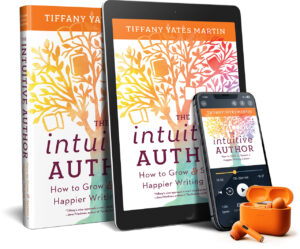
I care passionately about helping authors build satisfying, sustainable careers as writers—so much so that I wrote an entire book about it.
That’s why I crush their dreams. So that they can lay a foundation of realistic and practical knowledge of what our business is and how it works, and forge a career where they take control of the parts where they have agency and autonomy, and find creative and personal fulfillment and joy despite all the parts where they don’t.
The One Common Component of Success
But this post isn’t about why or how you can build a successful career despite all of the publishing industry’s challenges and realities. I’ve written about that here and here and here—and in all these posts here.
I’ve been holding on to this New York Times article (gift link) for a while now, since it first ran at the end of last year, because I was struck by how varied and unpredictable the path to bestsellerdom was for the five authors/books profiled in the piece.
They include:
- a 70-year-old musician who wrote his first novel mostly as an exercise just “to see if I had the muscle to write a piece of long fiction” and self-published it to ever-building sales before a traditional publisher picked it up and pushed sales even higher (Allen Levi’s Theo of Golden)
- a 39-year-old author ready to give up on developing a writing career until she decided to give it one more shot during the pandemic, penning a story based on her own habit of writing letters to celebrities and strangers, whose sales slow-built over six months until her book hit the NYTimes bestseller chart (Virginia Evans’s The Correspondent)
- a previously self-published fan-fiction serial first released on an open-source site to more than 10 million views and 100K reviews that was picked up by a major publisher and sold 850K copies in its first three months (SenLinYu’s Alchemised).
- a quiet novel about a child and her grandfather visiting museums first published in French by an independent press, which gained word-of-mouth notoriety and sales from booksellers before topping sales charts (Thomas Schlesser’s Mona’s Eyes).
- a middle-aged author who, after decades in a writing career in which he’d long since given up on hitting the bestseller lists, spent six years writing an epic multigenerational story inspired by a scandalous secret within his own family that was picked up by a major publisher and became an instant bestseller (Patrick Ryan’s Buckeye).
What all these stories do not have in common: None of these authors did it the same way. None of them wrote similar stories that conformed to a formulaic system. None had a “typical” path to bestsellerdom.
Three were debuts. One was written over six years. One was the author’s eighth manuscript, after trying to secure an agent/publisher for 18 years. Two were first self-published. Some benefited from traditional marketing efforts from a publisher, some from high-profile review coverage, some from word of mouth from readers and booksellers.
Two authors are in their thirties, one in his forties. One turned 60 just before his novel was published. One is 70.
What they do have in common: Their stories are deeply personal.
And most of all: They wrote.
You have to write. A thing I often tell writers who are feeling discouraged about the often long and complicated process of finishing a manuscript, editing and revising it, and getting it out into the world is that simply by doing it—by putting those first words on the page and continuing to do that until they had a complete story—they are already far ahead of the swaths of people who say they dream of “writing a book one day.”
Because the author actually did it—that hard, frustrating, sometimes overwhelming and opaque work of writing.
If there’s a secret to becoming a bestseller, that’s it. Write.
And then keep writing. Make it better. Keep learning and growing your skills and your understanding of the publishing market. Send your stories out into the world and see how they land.
Then do it again.
And again.
Upping Your Odds
Let me say it this way: Every morning, after I’ve gotten a little coffee into me, I do sun salutations. I’ve done this a long time—twenty years, nearly without fail, day after day after day. A few years ago I added push-ups to my routine, and a few months ago I added getting up off the ground from a cross-legged position without using my hands.
I started strength training seven years ago and I do it twice a week—again almost without fail (including wedging four workouts in onboard the river ship on our recent Rhine cruise in a gym smaller than my first rented room in New York at a women’s residence).
I do these things because, as I like to joke, I’m creating the body I’m going to get old in, and I want it to be as strong and healthy and mobile and pain-free as possible. I do everything I can to make that more likely.
But there’s no guarantee that’s going to happen. I might do all of this and still get some wasting disease that cuts my projected future short or destroys all my dedicated efforts by rendering me bedridden or nonambulatory or pain-riddled or otherwise physically or mentally impaired. I might incur some accident or carry some genetic legacy that causes all those things. I might get hit by a bus. (Why is it always a bus? Considering that most pedestrian accidents are with cars, motorcycles, and bikes, I’m thinking bus drivers have gotten a bad rap.)
But…I might not. I might get the allegorical winning lottery ticket of aging and carry on in robust health and fitness, flexible and spry and fully compos mentis until, after a long and fulfilling and happy life, I die peacefully in my sleep side by side with my similarly healthily aged husband, the person I love most on this earth.
But we probably won’t. The wheel of life has too many pie wedges marked with undesirable outcomes, and we have too little control over how it spins or where it lands.
All I can do is try to widen the good segments—or create more of them—so that my odds are better. Do the stretches. Lift the weights. Get my heart beating. Eat healthy (for the most part) and try to take care of myself, body, mind, and soul.
Day after day after day.
And as a result, I feel great now. In middle age (bleh, that phrase) I feel stronger and in better shape than I’ve ever been, the normal aches and pains of aging so far mostly kept at bay.
You don’t have to write every day. You don’t have to write at all, darlings. But doing it—on whatever schedule works for you, as regularly as you possibly can—is the only way you might achieve bestsellerdom…one day, if the Muse smiles upon you and you keep improving your craft and all the stars in this crazy, unpredictable, subjective business align just as you wish.
I wish it for you.
That’s the only secret to success I or anyone else can offer you.
But don’t just wish. Do.
Authors, do you have a specific writing routine—and do you honor it? For just about my entire career I’ve segmented my weekdays into two parts: mornings are for my own creative work, whatever that may be (writing, course creation, etc.); afternoons are for editing. Because of that my creative muscles stay in shape: When I sit down every morning I’m ready to work and I do, and it’s why I stay creatively productive. Even if you don’t have as much flexibility in your schedule, can you set aside a certain amount of time—even just an hour or a few hours every week—and concretely schedule it, even if that schedule varies, and then honor it as steadfastly as any other “must-do” item on your to-do list? Can you make setting aside time for your creative career nonnegotiable?
If you’d like to receive my blog in your in-box each week, click here.
22 Comments. Leave new
I’m happily retired, so I was sure I’d write at least 2 books a year. Yeah, right. Just like I was never going to be one of those seniors with balance problems. Ditto-right.
I have a daily writing routine that varies depending on releasing, marketing, teaching, etc., but I do something for at least an hour with writing every single day.
And I’ve added balance excersises recently.
The other thing that helps – old people love routines.
Another thing I never thought I’d do.
Getting older is humbling.
Laura, I don’t think discipline and dedication are your particular struggle areas. 🙂 You have always seemed very proactive and motivated regarding your writing, at least from where I’m standing.
I’m with you–the routines help, but for me they always have. I like loose structure, but some structure–the routine elements are what keep me regularly doing the things I want to do. Weird how we can find reasons NOT to do things we say are important to us, isn’t it? That’s what my routines help me combat.
But wholly agree: Getting older requires fortitude. I always joke that it’s basically a never-ending series of holding your ground against seemingly constant attrition. But it beats the alternative, right? 😉
Thank you for your every day practice of gently urging us on.
It’s really just me sharing my own inner pep talks with myself…but I’m awfully happy they resonate. 🙂 Thanks, Tara.
My routine saved me. For a little over a year, I have been writing Monday – Friday from 5:30 – 7 AM (once in a while, I forget to stop and write until 9 or 10!). I’ll even slip in a Saturday or Sunday here and there. Before I inked the time slots on my calendar (on my Google calendar), I gave myself too much permission to skip, reschedule, or fall into long periods of not writing at all – the worst vortex of all. Now, my pups know that my writing time is my time. They aren’t going to get a walk or get fed until at least 7 AM (I do get up at 5, go out back with them, brush my teeth, make coffee, and stretch – but at 5:30, it’s pedal to the metal). The bonuses are the days when I go back and write after work, during lunch, and yes, sometimes on a boring Zoom meeting, all because something I worked on in the morning wouldn’t stop percolating in my head, and I had to get back to it.
Putting a stamp on my mornings, scheduling that time, let me put myself first, and that has been the best gift of all.
(Tiffany, thank you for all you do and for being an inspiration to writers like me!)
I love that even your dog is trained to your writing routine. 🙂 What intrigues me is not just how you’ve trained that creative muscle to respond on your routine, but that it can result in that wonderful creative percolation that draws you back to it later too. I swear that’s my best creativity time–when I wake it up and then it keeps cranking in the background as I go about my day. Like you, I will often go back and add, tweak, or clarify something I’d been working on that morning. I love “putting yourself first” too–I hadn’t put it in those terms, but you’re right: Honoring our creative work before anything else is a great way to send ourselves the message that it–and we–matter. Thanks for sharing this, Rachel–and your lovely comment! It’s very much appreciated.
For the past ten years, I have dedicated between 15 and 25 hours a week to writing. I usually do this in the morning after breakfast and getting ready for the day, Monday through Friday and sometimes must work on Saturday. I read emails and newsletters first, participate in webinars, and met with a writer’s group twice/month for 7 1/2 years. I write down my start and stop times and record time on a paper calendar. I’ve attended the Erma Bombeck Writer’s Workshop 6 times and thrive on the content and camaraderie there.
I look forward to this dedicated writing time and miss it when I vacation. Similarly to you, I also exercise regularly, an hour a day 6 days/week. I don’t know how well either of these disciplines will pay off in the end but am enjoying the time I’m investing and am in better health than most folks my age. Routines are grounding and comforting to me. Thank you for this weekly dose of reality!
That’s a fantastic amount of writing! How wonderful that you can dedicate that much time to your creativity–and yes, I agree that making it routine, on whatever schedule works for someone, is key to keeping that creative muscle in shape and responsive, even if it’s not as much time as you’re able to dedicate.
Like you, I also have to do these things early in my day–both creativity as well as exercise. It’s when I’m at my freshest mentally, I think, and by day’s end I’m depleted enough that neither mental nor physical inspiration is likely to hit. 🙂 Thanks for sharing this, Lee.
Oh thank you Tiffany! What an encouraging, lovely, heartfelt, inspirational post.
Thanks, Syl–glad it hit the right chord!
A wonderfully inspirational post. Thank you. I have the exact same approach as you concerning my health, and the same approach to my writing. In 2010, the doctors wanted me to enter hospice. Last weekend, I reclaimed the last of the outdoor activities that I enjoyed prior to my illness.
That’s persistence. Like your examples. People who kept trying, or tried one more time when reason said to give up.
In another example of “unlikely,” my blog post this morning was essentially an answer to your post, but I’m not going to share a link. I find that tacky. Instead, I’ll answer here.
I do have a regular writing routine (I’m retired), and I honor it. I protect it. I’m also patient, persistent, and pragmatic, yet forever hopeful. Hope is why I ignore the probabilities. A love of what I do is why I keep writing.
I’ve now released the fourth book in a seven-book series, my sales minimal, but I DO have sales. That could change before or after I die, or not at all. There are an infinite number of reasons for low sales, including that people “just aren’t into me.”
I accept that.
Many people would have me give up, but I won’t. As I honor my process, so too I’ll honor my few readers. If I don’t love what I’m doing, that’s when I’m wasting my time.
Wow, Christine–what a recovery from the grim prognosis you’d received. And yes, a testament to your determination and resilience; we’re not guaranteed the results you’ve had even with those traits, but I’d imagine we’re guaranteed not to have the outcomes we want if we don’t practice them.
I’m always a bit baffled by people who counsel someone–artists especially–to give up if they aren’t “hitting it big.” To me it misses the point of what art is and why we do it–as you said, you love what you’re doing, and I don’t know a higher calling for pursuing something than that. Thanks for sharing this.
As an engineer for most of my career, I do value routine. But now that I am retired, I find that most of my brilliant ideas (just kidding) come when I am jogging or walking in the morning, my regular exercise regimen. I discovered that when I get an idea for a story or scene in a story, I must write it down as soon as possible (before I forget it!). It is the motivation to write what comes to mind that keeps me writing every day.
With respect to finding a major agent or publisher, I feel I would have to be in tune with the publishing industry, which I am not. Interesting how many of the top 5 bestsellers are self-published. That gives me hope that someone will read my books someday.
My personal opinion about how to write a bestseller has nothing to do with the publisher, agent, any foolproof system or coach or regimen. All you have to do in order to be a bestselling author gazillionaire is to write an amazing, fascinating, can’t put it down, page turning book! There, that wasn’t so hard was it?
It’s true, Jeff! I experience that too–much of my best thinking comes while I’m doing other things that allow my mind to percolate in the background, like exercise or walking or even cooking. I keep my phone nearby to dictate things into it in those moments, much as you do with writing these ideas down (otherwise, gone forever…).
I was also interested to see how many of the books in the Times article started their lives nontraditionally, self-published or as fan fiction, etc. The paths to publication–trad pub, in this case–have changed so much and continue to evolve. It’s one of so many reasons I think authors have to pursue the path that’s meaningful to them, rather than chase after some fixed idea of what constitutes “success” or worth. Not only do you never know where it might lead, but it allows you to enjoy every step of the journey no matter the destination. Thanks for the comment.
I am Desperately Seeking a routine (if I get one I will call her Susan) but I do have a very personal story to tell!
Ha–hope you create a Susan of your own soon!
Like reader Rachel Galligan, I write from 5:30 to 7 a.m. — as a base for whatever writing may come later in the day. I wonder how many other people are writing at that time, or any set time. I picture a New Yorker cover of an apartment house at dawn, with people writing in vertical rows of windows.
Like the opening credits of Only Murders in the Building, but with writers… 🙂
Once again, I loved this, Tiffany! Your “JUST KIDDING!” at the beginning sounds so much like something I’d say that I audibly laughed.
And now, I’ll get back to doing the writing thing. 🙂
Thanks again.
Glad to hear it hit a chord! Now back to that WIP, you…. 😉
I retired 3 years ago from a career building multi-national cybersecurity education programs that kept me sitting in a desk chair, often for 50-60 hours a week. I was determined retirement would mean more time to write and get my aging body back into some sort of shape. Then my brother had a major medical issue the day my 2024 novel launched. I’m his medical point person. It was tough, but it made me structured and resourceful for two years. I write from 8-9 a.m. with a great group of writers called the Early Birds. If I can start earlier or go longer, I do. When my brother’s medical issues and a need for advocacy took over, I learned to market books from my phone or take my laptop and hideaway in various spots in hospitals, rehab centers, nursing homes etc. He’s more independent now, but I stick to writing in the morning and in the afternoon trying to get in exercise, read, and manage all the life things like home care etc. I’m responsible for transportation for my brother and my 92-year-old mother, but I can write or market from nearly anywhere. Doctors waiting rooms are great places to read a book! Since retirement, I’ve published two books – neither is a big seller, but both have received a little award recognition. I’m still behind on doing better with regular exercise, but I feel like I’m both writing and being a happily retired person!
Wow, Janet–“retirement” for you sounds like it’s been a full-time job, with caring for your family. How lovely that you can do that–and that you still make time for your writing. I’ve talked to a number of authors who write as you do–in “snatched” moments amid their busy schedules. As you’ve illustrated, though, that can get you to the finish line. Congrats on your two books, and living your deferred dream. Thanks for sharing this story! It’s inspiring.