

If you’d like to receive my blog in your in-box each week, click here.
Creativity needs both room to wander and a direction to follow. How can you balance creative freedom, structure, and focus to bring your best ideas to your writing?
A writer’s greatest tool, arguably, is their imagination. Regardless of how thoroughly you master the craft of storytelling, the art of writing, and your skill with language and words, without that endless font from which ideas spring your creativity will quickly dry up.
The problem is that often we expect our imagination to remain agile and powerful, ready to perform on demand without our nurturing it.
As with any wild and unfettered creature, you must find time on the regular to allow your imagination to stretch its legs and run—while curbing its tendencies to run wild or run away.
I’m of the mind that both our imagination and our creativity are unlimited, but like any other resource they need tending and replenishment—exercise and feeding: use them and nourish them and these potent resources will be there for you throughout your life.
But as with any wild and unfettered creature, you must find time on the regular to allow your imagination to stretch its legs and run—while curbing its tendencies to run wild or run away. It’s an odd tension you must maintain between giving your imagination the focus and direction it needs, while also allowing it plenty of loose lead: structure balanced with freedom.
That requires your attention—an element too often in short supply in our busy, preoccupied lives:
- We’re juggling our many responsibilities and concerns that demand much of the attention our imagination craves. It rattles the bars of its cage while we see to all those obligations, but never gets the freedom and focus it needs to flourish.
- We carve out our writing time and sit to do it, expecting our imagination to be ready to fuel it on command, feeling frustrated when it doesn’t immediately leap into action.
- We fracture our focus, distracted by the internet or AI or the phones that sit nearby, too easy to reach for and respond to like the conditioned animals we are when it beeps and chirps, while our imaginations languish or wander away without our attention.
But we live in the world, where time is finite and most of our commitments and responsibilities are nonnegotiable. So how do we find that focused, dedicated time our imagination needs, and the disciplined hand required to guide it?
Making Time and Space for Your Ideas
On one of my recent dog walks with Gavin, I let my mind play over a presentation I’m developing about bringing stories to life with context and specificity. I thought about the issues I most commonly see writers struggle with in this area, and what suggestions and advice I offer when they do. I thought about what might make it easier for an author to spot these missteps in their own work.
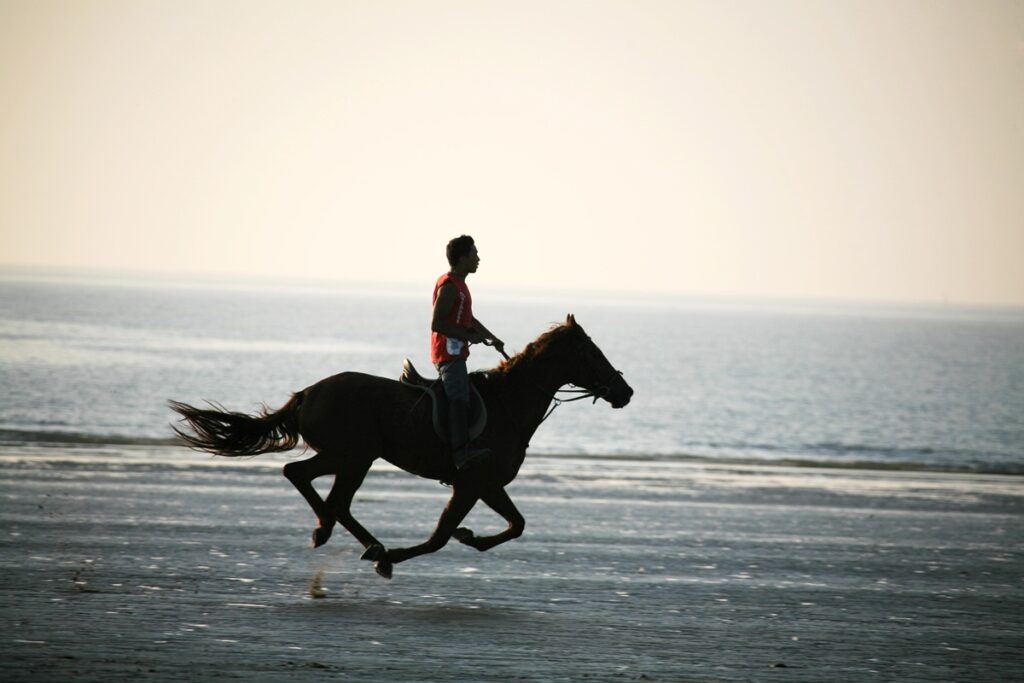
When I go out with the intention of letting my imagination come to the front burner, I direct it and give it a little bit of guidance. It’s more than just idle mind wandering; I like to think of it not as giving my imagination total free rein, but rather guiding the horse yet letting it gallop. I’m holding the lead to keep it on the path, but then I just let it roam while Gavin and I walk along with it.
Ideas start to come, and as they do I will occasionally take out my phone and dictate them into it, but then I immediately put it back in my pocket till the next notable idea pops up, all the while gently guiding my imagination back to the subject at hand anytime it tries to wander off.
I do this almost on the daily, and in this way I have written countless blog posts and developed an untold number of ideas for presentations or articles or manuscripts I’m working on (which is now making me think I need to give my dog some sort of title in my editorial business, since it’s his regular need to be walked that encourages me to let my mind productively roam).
But even if you don’t have a dog—and why don’t you have a dog?—you can set aside some of these found moments to let your imagination run free. Don’t think of it as idle time; think of it as necessary exercise to keep your imagination in its best shape.
The detail work to flesh out these ideas often comes later, when I’m sitting at the desk and bearing down on them deliberately, but the big ideas can almost always only come from that looser brainstorming approach, not unlike the way a visionary CEO might ideate the big ideas for their company that the rest of the team then figures out viable ways to implement.
Set aside intentional moments to let your imagination run free. Don’t think of it as idle time; think of it as necessary exercise to keep your imagination in its best shape.
My brain has that kind of partnership with itself—the creative and the analytical departments working in tandem—but I have to allow it time and space and circumstances to do both parts of its job.
Give Your Creativity Room to Roam
Where could you snatch these moments to loose the reins on your own imagination? When I used to commute, my driving time was often my best focused mind-wandering time, deliberately absent music or podcasts or phone calls to distract me.
When I lived in New York and didn’t drive at all it was my subway time, or the walk to anywhere I might have been going. It was easier then to allow my mind that space because we didn’t have phones to distract us. (Just an incredibly dorky pager clipped to our belts that made us jump and find a pay phone the moment it went off. How’s that little blast from the past, kids?)
Sometimes I’ll find opportunities when I’m cooking or baking, especially with recipes that don’t require a great deal of attention from me. One of my favorite times for it, which my friends have never understood, is painting walls in my house, a task I actually love because it requires focus but not brain space. My hands do the detail work of cutting in at the edges while my mind noodles on whatever topic I’m working on.
Maybe you have a chance to exercise your imagination while exercising your body, or doing laundry or dishes or other chores that require your physical attention but not your mental bandwidth. Maybe it’s while you knit or garden or make pottery. Maybe it’s only as you are showering or getting ready in the mornings.
But whatever time you devote to your imagination, the key is your focus. Intentionally leave your phone in the other room, stay off the internet, and—for me, anyway—get rid of any background noise like TV or podcasts or even music. Your imagination needs your dedicated attention, and all these distractions will fracture it.
No matter where your found time is, avoid the distractions that are so easy to fill it with. For imagination’s sake that can often mean other people, whether virtual or IRL—although at certain stages of ideation it can be helpful to have sounding boards. For instance, that was how I found the perfect title for Intuitive Editing: talking out the book’s principles and approach on a hike with friends.

These intentional but unrigid moments are where I have the most freedom of thought and the most authenticity in my voice too. Sometimes when sitting at a desk in front of that damned blinking cursor it’s easy to stiffen up, to worry about making everything sound just right. When I’m walking it’s more stream-of-consciousness, the real me vomiting up my thoughts in the way I think them, which is often infused with my personality and perspective and voice.
I don’t worry so much about judging or editing in those times. It’s as though I’m enjoying the casual conversation with myself, or I suppose with my own imagination, and expressing myself as freely and authentically as I ever do.
Of course, when I get back to my desk with all of my dictated freestyle thoughts, it’s time for that left-brained editor to step in and assemble and edit them into something coherent and fluid. But I’ve given it good material to work with at that point. When I’m walking or exploring my thoughts and ideas in that way, I access the farthest reaches of my imagination, ones that I might never get to in a more structured environment if I’m too constrained or playing it safe.
During that same walk with Gavin, after working through the issue I’d been noodling on for my presentation, I dictated much of this blog post and came up with ideas for two others, loosely developing and outlining them as we walked, all while getting some exercise, feeling the breeze on my skin, watching my insane dog sniff every scent in a three-mile radius of our house, and enjoying the uncommon and lovely greenness of Austin after uncustomary rain. Win-win-win.
If you’re counting, that’s four separate work tasks I made excellent headway on in the course of a 40-minute walk with my dog out in nature. I’m often asked how I’m able to be as productive as I am, and you’re looking at it.
Be intentional about caring for your imagination. Set aside dedicated times to give it your full focused attention, while allowing it the freedom to explore its own limitless potential and capability.
Check your impulses when you mindlessly send or answer a text or email, or open a social media app and start scrolling, or check “this one thing online really quickly.” You’re about to lose a minimum of 5 minutes and probably more like 20 or 30. Is this how you want to spend that valuable time of your creative life?
Or do you want to give it to the part of you that I’m guessing as a creative you value the most: your imagination?
What are your best imagination/noodling opportunities, authors? Do you focus your creative efforts in those moments, or let your mind wander unstructured?
FoxPrint Editorial helps writers strengthen their manuscripts through developmental editing, education, and practical writing guidance. Explore more articles on revision, storytelling, and the publishing process.
If you’d like to receive my blog in your in-box each week, click here.
4 Comments. Leave new
Just great!
🙂
So important! And for me, there is something about being outside walking my dog that unleashes the capacity to be both present and in my head. My Sammy is so delighted to be sniffing, trotting and enjoying the world…I think it works through osmosis to help me push to-do lists, niggling worries (and yes, technology) to the rear burner. He teaches me to chill—that as long as I have food, am comfortable, and can walk on my two feet, the rest is gravy. A good place from which to write!
For me it’s while driving, and the workings of my brain actually seem to follow the topography. I live a ways out in the country, and if I set my mind a problem when I’m beginning the drive into town, I can feel it working underneath the surface while I’m driving through a twisty, tree-dense area. Then I get to a particular stretch of the road where it opens out into a beautiful vista over a valley, and often enough, *right there* is where a creative response comes to me.
When I’m using this technique, I follow a similar protocol as you do on your walks with Gavin– no music, no podcasts, gently nudging the brain back, and dictating into my phone when I have something to remember afterwards. It’s kind of like a driving meditation. I always get so excited when it works for me; it’s a fun reminder that brains are mysterious and powerful things that we’re not always 100% in charge of, even when we think we are. But we can do our best to work with them.