

If you’d like to receive my blog in your in-box each week, click here.
Of all the implications and impact of the Shy Girl hubbub—the book whose publisher dropped it just before publication over concerns that it was partly AI generated—what I keep getting hung up on is this: The author blamed her editor for the incident.
It bothers me not because she’s making her editor the fall guy, but because of what it suggests about the broader understanding of an editor’s role. Editing is one of those areas of the publishing industry that can feel mysterious or opaque to authors because it’s largely invisible except to the author and production staff. It’s hard to know what an edit is supposed to look like or accomplish unless you’ve seen editorial feedback firsthand, either your own or other authors’.
The truth, of course, is that there is no “supposed to” with editing, any more than there is in writing. Every editor has their own style just as every writer does. Much of a successful editor-author relationship involves finding the right fit between the editor’s approach and style and the author’s.
But because this incident has shined a light on what an editor actually does (or should do), and because I’ve also seen and heard from many other authors about widely varying editorial approaches—and, relevantly, because AI is also impacting the issue—it may be useful to lay out some parameters and expectations for exactly what and how much you might expect an editor to do on your manuscript.
Read more: “What Type of Edit Do You Need?”
Developmental Edit Level
“First do no harm.”
I joke this is the editor’s Hippocratic oath, just as it is the medical practitioner’s. When I approach an edit I am mindful that I am the midwife for the author’s creativity. I did not make this baby, and I will not be raising it; it is not my baby. My role is to help the author bring their baby into the world.
That means that as a developmental editor I try to hold up a mirror to reflect to the author what I’m seeing on the page, but I don’t offer prescriptive feedback to tell them exactly how they should address it. I share my observations and my reasoning to help the author see what may not be coming across clearly or might benefit from more depth or development: “This is how it seems; is this what you meant to convey?”
Where I give suggestions, they tend to be in the form of questions to help an author determine how to address the gap between their intentions and how the story is coming across on the page—specific elements that might make their story more effective and affecting: “Readers may not yet understand why she’s changed her mind about this; can we see more of what led to this turning point?” or “Why does this comment affect her so negatively? If this is hitting a nerve for her, you might let readers see more clearly what that is or where it came from.” It’s up to the author—the story’s creator—to determine which comments resonate with their intentions, and how to address those that do.
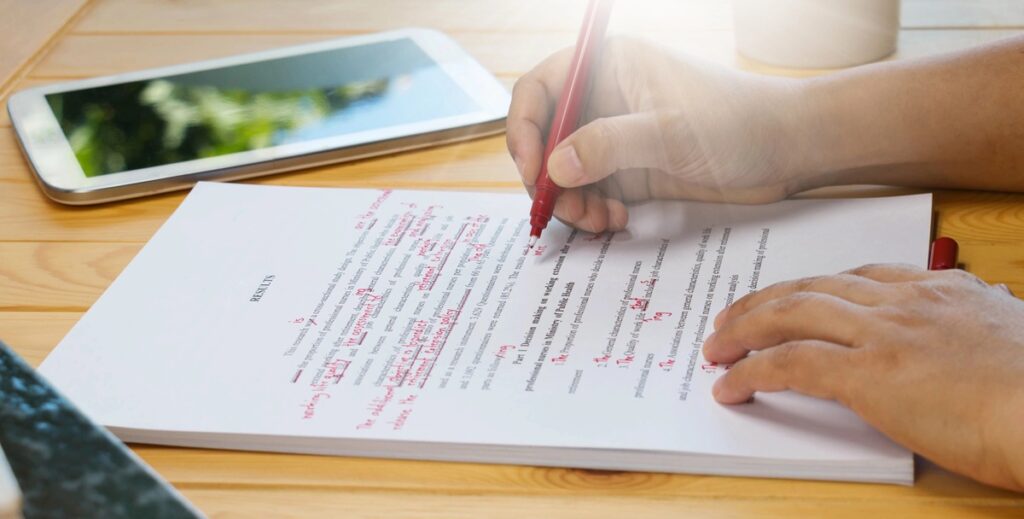
That’s not to say that when an author receives a manuscript back with my editorial notes it won’t be heavily marked up. In fact it’s likely to be, with often hundreds of comments embedded, along with an extensive editorial letter. But they will be framed as observations and questions to help an author understand why I am making a suggestion and to consider ways they might strengthen the story, rather than as instructions—and I certainly don’t make those changes myself. Remember it’s not my baby, so it’s not for me to tell them how to raise her up.
Every editor works in their own way, with their own style, so it’s key to find one who meshes with yours. Edits may be more extensive or less; more prescriptive or less; more hands-on or less. I offer an intake questionnaire to determine what approach might be most helpful for an author, but my style is still my style, which they’ve seen in a sample edit by that point.
But what I do suggest to authors is that they consider whether they want to work with an editor who gives overly prescriptive instruction, or actually makes changes. In my view that’s well beyond the purview of a good edit. (You may welcome an expert’s advice on how to raise your baby, but chances are you’d be less receptive if they step in and start doing it directly.)
And I would have thought it goes without saying, but given the Shy Girl situation…it is 100 percent your responsibility to review every single one of those edits and decide what’s right for your story before submitting or publishing it.
Read more: My extensive “Get It Edited” guide—a free download for authors—goes into more detail about how to find, vet, and work with the right editor for you.
Line-edit Level
Where I make line-level suggestions in an author’s manuscript, again it’s generally in the form of noting my observations and posing questions for the author to consider: “You’ve used this word three times in the last two paragraphs. Perhaps vary?” “This line says essentially the same thing as the one before it, which is stronger. Delete this one?” “This word connotes x, when I think you mean y; is this the meaning you intended?”
On rare occasions where it’s easier or clearer for me to actually make line-level changes I will sometimes do so, but I always preface them by telling the author that this too is simply a suggestion, offer my reasoning, and if they disagree they can undo it in Track Changes and revert to their original phrasing. Again I trust that the author will review any suggestions and changes I might make to determine what suits their intentions and their voice.
And as to the latter, that is one of the biggest principles guiding me: I strive to retain the author’s voice and style and vision. Which is a great segue to the next type of editing and what an author might expect it to look like.
Copyedit Level
I started my career as an editor in copy editing, which means I have developed a fairly comprehensive understanding of grammar, usage and syntax, spelling and punctuation, etc.
Those areas aren’t generally within the purview of a developmental edit, although I will often make minor suggestions on that level when working on an author’s manuscript. But when you hire a copy editor you are seeking their expertise in catching any technical errors in your story, including factual ones, which is also part of a copy editor’s responsibility.
My editor’s Hippocratic oath applied also to my copy editing for the dozen or so years I did it: First do no harm. One of the most important but slippery skills of being a good copyeditor is knowing where to draw the line between correcting an “error” and changing the author’s voice or intentions or style.
I once had a copy editor for one of my own novels with a Big Five publisher who stringently went in and inserted the pluperfect tense anywhere it was strictly called for, which resulted in a preponderance of clunky “had hads” and “had beens” and “had seens,” etc., that slowed pace and risked pulling readers out of the story. I had made [see what I did there?] specific choices to sprinkle them in only where needed to orient the reader and otherwise revert to straightforward past tense, trusting that the reader didn’t need spoon-feeding.
Changing or neutering an author’s prose in favor of strict and sterile pure grammatical correctness is a quick way to radically alter their voice and style and intentions—and piss them off or shut them down. At most publishing houses, and certainly if you are indie publishing, authors have the freedom to reject a copy editor’s changes or suggestions—but that means you need a solid working knowledge of the language, because copy editors are primarily working to make the story as clear and readable as possible for the reader. Rejecting a change that genuinely needs to be made to achieve that purpose means you may be doing harm to your own story.
I have worked and talked with authors who, as a final step in their drafting and editing process, will feed their manuscript into an AI grammar checker for it to “polish” or “punch up,” and what comes back is often a bland and sometimes nonsensical soup. AI doesn’t know artistry, and good copy editing is an art, based on all of the ephemeral factors I mentioned: the author’s voice and intentions, the syntax and context of how the language is used, and of course the many vagaries of English grammar and spelling. These AI grammar checkers are often taking a machete to a job that requires a scalpel.
Words and language are the core tools of a writer’s craft. Writers don’t necessarily need to develop as exhaustive and comprehensive an understanding of the language as a professional copy editor has, but part of developing mastery of your craft means learning it well enough to use language deliberately and intentionally, rather than making unforced errors that muddy your intentions and weaken your voice and authorial authority.
If you are leaving these sorts of decisions to your copy editor as “grunt work” or unimportant cosmetics, then you aren’t yet mastering or wielding the tools of your craft as effectively as you could. You don’t craft the David by leaving the fine chisel work to someone else. That is part of the artistry and intention of the work, essential to ushering your reader into your story and conducting their experience of it.
Read more: “What to Know When Hiring a Pro”
#
So how much should an editor do? I have seen and heard about editors who return a manuscript to an author redlined into a murder board, rife with the editor’s changes for ways to make it “better.”
But I’d argue that that’s a bit beyond the scope of the job—and in fact it misses the mark of what the job is. Even with copy editing, an editor’s role is not to go in and heavy-handedly change the author’s words or phrasing or voice or story, but simply to offer their subjective opinion (which is all anyone’s feedback is) on what might strengthen a story, and allow the author to determine what resonates for them and what doesn’t, and put that feedback into action.
First do no harm.
And then it’s the author’s responsibility—yours—to determine what’s right for the story you want to tell and what isn’t, make any changes yourself, and ensure before you send it out into the world that every word of it reflects your intentions and your vision.
Authors, I’d love to hear your thoughts and experiences. If you seek outside input on your writing, what kind of feedback are you looking for or expecting? What editorial approach works well for you and what doesn’t—and why?
If you’d like to receive my blog in your in-box each week, click here.
18 Comments. Leave new
The more I interact for whatever reason with dev editors, critique readers, beta readers, et al (insert pro or semi-pro ‘creative writing professional’ here!), the more I think the whole thing is, beyond some simple stuff, pretty much subjective.
Which is not to say that getting help with your writing/editing is necessarily of no value; indeed it can be very valuable. But …ultimately … it’s opinion (or tailored to genre convention/what has worked commercially before).
Absolutely it’s all opinion–as is any publisher’s, agent’s, or reader’s. In art there are no “right” answers or absolutes–if there were, everyone who figured it out would turn out nonstop bestsellers. Ideally, with professionals, their opinions are based on broad experience, understanding, and skill in knowing what makes stories effective and impactful–but of course there’s no single path to that, and it’s ultimately up to the author to determine what’s right for their story. But as you point out, Fleur, good feedback can be of great help in seeing your work more objectively and mining out all the gold. Thanks for the comment!
Completely agree! It has taken me many workshops, editors, etc. to finally get this. In fact, too much input can really mess up confidence in your own voice and throw you off the path.
I agree; I’ve spoken–and even sometimes worked–with authors who’ve hired multiple editors, and I always think it can be too many cooks in the kitchen and often dilutes or homogenizes the author’s voice and intention. A great editor can be among the best things an author can do for their writing; but a less skillful one (or a surfeit of them) can do more harm than good. Thanks for sharing, TR.
I get outside input and seriously consider each comment/question before I accept or reject the suggestion. However, I did work with one person who made multiple changes to single word choices when I chose those words for very specific, intentional reasons. Additionally, there were changes to lines that completely altered the meaning. At that point, I knew this wouldn’t be a good fit because it felt like the person was trying to flatten the work into the style she wanted vs. sharing constructive feedback.
I agree with that, Holly–I bristle a bit when editors change my wording; I am deliberate about it, as you are–as many writers are, I think. And to me it’s imposing the editor’s voice onto the author’s–I think it’s better to query something that may be clunky or flabby, or at least frame any changes as suggestions, and let the author decide.
This is such an excellent article, and I gained so much information from it to discern between my job as a writer and what I would expect from an editor, paid or otherwise.
Glad it helped! The Get It Edited guide I mention in the post is a more extensive breakdown of what to look for and expect to find the right editor for you. Thanks, Marva.
Thanks for stating editorial guidance so clearly and succinctly. I serve as editor for my wife’s books, and I try to be careful not to change her voice, while edit the copy for continuity, grammar, etc. Occasionally I can call out to her (as she sits on the sofa reading a book) and ask her about what she meant, or to resolve conflicting wording. Not many editors get to do their editing alongside the author while sitting by the fireside!
Well, now I feel like my working situation is subpar…I have neglected the fireside approach. 🙂 You’re right–it’s a luxury to have your editor right there asking your intentions and offering feedback in real time! Thanks, John–glad the post hit the right chord.
Thank you for this article. I completely agree with you about the end product – Whatever the editor does (or doesn’t do), the ultimate responsibility belongs with the author. My eyes should be the last thing on the piece before it’s published, no matter who else has made edits or suggestions.
Finnian! Hi! 🙂 And HELL, yes, about the last eyes and final approval. How could it be otherwise for any craftsperson or artist?
I haven’t forgotten your generous 5 Questions invitation–I’m hoping to touch in with you in May about that if it’s still open.
A few weeks ago, I asked for your help on the first 50 pages of my new novel. I was looking for a “sincere Gestalt” and was hoping that from a professional perspective you would tell me whether you liked the opening. I was extremely pleased with your feedback, both in how the first few pages came across and how the book was organized. I typically also have 5 – 10 beta readers who tell me whether they liked the story or not. My interest in writing is telling a great story with a new theme that hasn’t yet been overwhelmed on bookstore shelves. To that end, I am happy to entertain suggestions, grammatical and developmental that make the story more compelling. I confess, after making the recommended changes, I run the book through AutoCrit for a grammatical and side by side comp with similar books. Sometimes I take the AutoCrit suggestions and sometimes I don’t. But it’s my decision and responsibility as the author. I do not believe AI editors will ever be a substitute for a real professional editor like you, Tiffany.
I don’t know AutoCrit, Jeff, or what the side-by-side comparison with comps is. But I’m very glad to hear our editorial consultation was helpful (and validating!), and hope you’re enjoying revisions and pleased with how they are coming along. Your story is such an interesting one!
I’ve had both ends of the editing spectrum. The person I use for developmental editing and for line editing is great. She lets me have my voice while asking thoughtful questions and giving solid suggestions. When it was time for the copy edit, she suggested I find a different editor because “another set of eyes” would be good for the final manuscript. The problem there was the copy editor overstepped and basically did almost a line edit with a couple of pinches of developmental editing thrown in. I was new and had no clue. Thank goodness the original editor did the proof. (She was pretty mad.)
With my next novel I am keeping the original editor and searching for a new copyeditor. Live and learn but. . . it cost me MONEY!
It can be so hard to find people whose approaches mesh with yours. It’s worth taking the time to really investigate someone you’re thinking of hiring–but even so it can be hard to know what their style will be if you haven’t seen it. (That’s a big reason I always suggest authors ask for a sample edit before shelling out thousands on a developmental editor, though that’s not as feasible with line editing or copyediting.)
I agree with your dev editor about copyediting. I used to offer it as part of the package with a developmental edit, early on, but quickly realized exactly what she said: You lose some of that freshness you need to spot everything once you’ve spent so much time in a manuscript–and also it was juggling too many balls to try to see all of it at once. You kind of have to tunnel your vision a bit to focus on specific things at every stage in editing. Thanks for sharing, D.R.
I like your style of leaving questions and prodding me to do the real work. My biggest complaint with some editors who try to change the voice and the character to what they want them to be. I can take harsh critiques and don’t get upset at where I went off track, but when you start changing the basic story to what YOU think it should be, nope, not happening. And that is when I dropped out of a critique group and left and didn’t go with an editor. I am currently going through your book and working on one story to see what I can do before hiring an editor. In line edits and copy editing, justify what I need to do.
That’s how I like to be edited too, Barbara. I’m always a little frustrated when I hear the notion that the writer does the drafting and then brings an editor to do the editing and revising, as if these are separate realms. By the time an author hires an editor, if they do, they should already have done as much editing and revision and tightening and polishing and development as they can–gotten the manuscript into as strong a shape as they’re able to make it. Editing and revision are a key part of the author’s purview–I always argue that they’re the main work of writing, actually. An editor comes in when you can’t take it any further but know it’s not all the way “there” yet and helps you mine out all the depth and nuance, and ensure your vision is coming across on the page as effectively as you intend. And for God’s sake, FIRST DO NO HARM! It’s not our role as editors to take the story over or impose our voice or vision onto it, but to help the author best convey theirs. Thanks for sharing your experiences and perspective!