


If you’d like to receive my blog in your in-box each week, click here.
I generally resist writing about recently taking up pickleball here in my middle years, because I try to avoid clichés in my writing.
But this past weekend my spouse and I played with two friends of ours who are at least a couple of decades younger than we are, and extremely fit and sporty. I’m talking taking-vacations-to-scale-mountains sporty. I’m talking Iron Man sporty.
I, on the other hand, am not what we would ever call sporty. I was a bookish child. PE was my nightmare, a class I struggled in and dreaded. Not only was I picked last for any sports team, but sometimes I wasn’t picked at all (it’s impressive how invisible you can make yourself when you choose to be).
Walking into most gyms gives me full-body paralysis, instantly regressing to that poor awkward adolescent I was, tripping over her own gangly limbs. (When you reach close to your full six-foot height by middle school, coordination and grace are not your strong suits.)
That said, I do enjoy being active—as long as it’s fun!—and regular readers know that in recent years I have even begun strength training with a personal trainer at a small gym…and I’m kind of loving it.
But back to this weekend’s pickleball. Walking into my trainer’s small boutique gym where I am very comfortable is quite different from walking into a giant pickleball facility where scores of incredibly athletic people are killing it on the court, to play with basically two Olympians and my husband who plays almost daily and on two separate pickleball leagues—one of which he recently won.
I felt myself tensing up as we settled in, mentally pre-comparing my basic level of play to their robust athletic competence. I knew I was the weakest link, and apologized for it in advance to my nimble courtmates.
After two hours of absolute hilarity and fun, on the way home my husband and I did our usual post-game breakdown and I said how much I’d enjoyed playing with our friends, even though I knew hadn’t done very well and held the rest of them back.
At which point the hubs issued a reality check, pointing out that I had held my own just fine, making a number of good shots and helping keep the ball in play on plenty of volleys. I was one-half of the winning team on more than half of the games—and it wasn’t because my teammate was carrying me, the hubs reminded me.
I realized that not only had I been focusing more on the shots I missed than the many I got, but that when I had made especially good ones, I was thinking of it as luck or a fluke. I was downplaying the abilities and skills and competence I actually have because I was holding myself up against everyone around me and looking only at where I fell short, rather than where I was doing just fine.
This Post Is Not Really about Pickleball
I think this is something writers do a lot: underestimating or downplaying our own work, our writing, even our own productivity because we’re looking at it against a backdrop of every other writer and myopically focusing on its perceived lacks by comparison, rather than its attributes on its own merits.
Instead of being loyal to the home team we’re doing the opposite: dogging it in favor of the visiting team.
You may recognize this impulse in many different forms: in the automatic self-effacement when someone compliments something you’ve done, in the way you may deflect the praise or diminish the giver of it, believing that they are simply being kind or don’t really know. Sometimes we may be immune to compliments altogether, painfully dwelling on all the areas where we feel we fall short instead of owning the abilities and accomplishments we have.
Talking smack at and about myself in pickleball results in my tensing up and having to overcome the additional hurdle of being in my head instead of in the game, and worrying too much about my prowess.
Versus what happens when I let go, enjoy, and focus on the pleasure of playing and improving rather than beating myself up for my shortcomings in it: I enjoy it a hell of a lot more. And I get better.
Creativity responds only to the carrot,
never the stick.
In writing, this kind of self-smack-talk can freeze you up, fill you with self-doubt, and chip away not only at your creativity but at the very part of you that can access it. And it undercuts your enjoyment in an interest that most of us pursue because we’re passionate about it. Creativity responds only to the carrot, never the stick.
Whereas letting go of all that nonsense, enjoying your own creative efforts, and focusing on the pleasure of engaging in it and improving lets you relish the process.
And yes…you get a whole lot better.
A healthy sense of competition can be helpful and positive and help you to grow and learn. Playing with three strong players this weekend certainly upped my game. Run amok, though, it can have the opposite effect, shutting you down completely.
So what can you do to get out of the mindset of the home-team disadvantage and stop knocking your own writing?
How to Root for Your Own Team
Start by not taking things that seriously. Our pickleball session was full of weekend-warrior heroics on everyone’s part, plenty of good-natured trash talk on the court at each other, and so much laughter that at one point two of us were prone on the court, incapacitated by it. Ultimately, it’s a game.
As important as our writing is to us, ultimately it’s make-believe—at its best a delicious, fun, fiercely free exploration of our imaginations and our psyches. While you may find yourself going after the ball (metaphorically speaking) so doggedly that you wipe out face-first on the ground, you can get back to your feet laughing—what a blast to chase after it that hard! Damn, you really gave it up! Now pick up your paddle and get ready for the next ball.
That approach lets you take a step back and assess the truth more objectively. How is your work really—irrespective of anyone else’s? Given that I’ve been playing only a few months, and only once a week, I’m actually doing pretty well—and every time I play I see how much better I’m getting.
It lets you be more rational and constructive in your assessment of your work too—to more accurately consider its strengths, not just its perceived weaknesses. Did you turn a gorgeous phrase, write just the right scene, find a delightfully unexpected plot twist to get your story where you wanted it to go? Then celebrate that—whether or not the whole thing is “perfect.” (There’s no such thing as perfect.) A great shot is a great shot, regardless of the rest of the game.
Don’t apologize for yourself. I apologized to both my teammates, but the truth was that when I played with each one, we won more games than we lost. And I wasn’t just riding coattails. I had nothing to apologize for, and doing so only undermined me unnecessarily—to them and to myself.
Finally, no matter what, be your own champion—because if you don’t, how can you expect anyone else to? And because you’re the home team, baby…and no matter what, you always stay loyal and root for the home team.
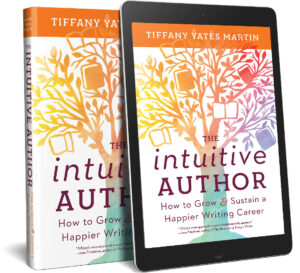
Tell it to me, authors—and be honest: Are you always in your own corner? If not, how does your home team disadvantage manifest? Do you recognize it when you’re doing it—and if so, what do you do to stop it?
If you’d like to receive my blog in your in-box each week, click here.
11 Comments. Leave new
Hi Tiffany, somehow this all sounds very familiar to me. I was a member of a writing group for years (very nice people by the way) – and they didn’t mince their words when it came to criticism. These people were prose writers and poets, and they all had a very specific voice. I myself had serious doubts about my own writing skills all that time and what did I do? Exactly, yes, I started writing for their approval. I made a kind of amalgam that everyone and no one could agree with, least of all me. It’s since I left this writing group that I evolved back to my own style, and enjoy writing again.
That’s such a common pitfall in crit groups! We try to please all palates, and can strip our writing of the things that make it ours–our voice and style and vision. It can be hard to carry our own torch–no matter what, all the time–but we have to. Glad this hit a chord, Greet!
❤️
Giant thank you from the middle of a difficult rewrite. (Is difficult rewrite an oxymoron?)
No, it’s just redundant. 😉 Glad it helped, Sherrill!
Oh my gosh, I recognize myself in everything you’ve written. Like Mr. Darcy in “Pride and Prejudice,” who “never looked at a woman without seeing a blemish,” I evaluate every word I write in terms of its imperfections, rather than its strengths. Who am I kidding? I don’t stop at words–I even find my punctuation wanting! (Don’t get me going about my lack of white space…)
I need to revisit WHY I write and allow myself to enjoy the process. To continue your sports metaphor, I will win some and I will lose some. Win or lose, however, I need to kick my snooty inner critic off the court and have fun playing the game. Time to let my words fall where they may, whether they make me an ‘Acne Hero’ or not.
I think that’s pretty common to a lot of us creative souls. It’s so easy to see our own work through a distorted lens, instead of objectively, and paint it with a broad brush–if it’s not perfect, it’s garbage. Learning to see the strengths as clearly as the weaknesses is key to improving our stories, and our writing–and to creating a happier writing career, and a centered place to operate it from. And yes, to remind ourselves this is FUN! 🙂 Thanks for the comment, Cara.
Absolutely, positively an excellent post.
I dare anyone to put their self-disparaging up against what I could unleash for years. In truth, I still have to be vigilant and this post was a wonderful reminder in that regard.
In the midst of a deep, dangerous low in 2020, I vowed to stop.
The battle is continual, but this home team is relentless and winning more often than she loses.
I used to disparage myself almost continually and most of the time I wasn’t even aware I was doing it. For instance, after drafting, with every little thing I found wrong (yes, after a FIRST draft!) I’d grumble, “Oh course this is wrong.” or “Why can’t you get anything right?” This, of course, carried over to everything, no matter how minor.
To fight back, I started with easy basics. Enough sleep, exercise, and meditation. I added in affirmations (they’re everywhere!) and greater self-awareness. My self-criticism is now honest and fair—and fun, maybe a little teasing, but always steeped in fairness.
For instance, when I return to a draft, I write a self-critique. I’ll tease myself over some things (“Please, I’m begging you, change this character’s name, it’s awful.), but I’ll also celebrate all that’s good, all that’s promising. I become my own cheerleader.
It’s time to bet on my writer self like I did with my health. Two hours ago, my pulmonologist said I no longer need to come back, that my primary can prescribe my inhaler. I’m doing that well. Go me! I earned it.
Oh, Christina, my heart hurts as you describe this self-sabotage–and it feels so familiar. Why is it so easy to attack and undermine ourselves? I think you’re so right that the battle is continuous–we may always grapple with the same demons, but I think (I hope!) we get better at spotting when it’s happening, and better at handling it when it does.
Love that your ways of doing that involve self-care, and lighter self-talk–those are so important (and some of my own coping strategies too). I always remind myself to have faith–faith that even if I am struggling, even if something isn’t coming out the way I want it to yet, I know I have the ability to stick with it and get it where I want it to go. That makes it easier to slog through the tough stuff.
Thanks for sharing this. And congrats on graduating from your pulmonologist! 🙂
Even though I have 3 books published, I still face the fear that my writing isn’t good enough.
I think many of us face that fear for most of our careers, off and on! I have a new book coming out next month–one I’m immensely proud of–and even so, some days I worry it isn’t good enough–and I’ve been at this career for 30 years.
This is one reason I write so often about writer demons like impostor syndrome–they are ubiquitous, especially among creative souls, I think–and can do more damage to your work, psyche, and career than nearly anything else. I don’t think we ever banish them–we simply learn to manage and coexist with them successfully. I dedicated an entire section of the new book to how to do that. I have learned to wrangle mine when they come, knowing their messages aren’t reality, just my fears, and now these bouts don’t last for long. I hope that helps! Congrats on your three books, Donna–you are clearly good enough, so remind the demons of that when they swarm out of the cave from time to time. <3